About
It all started when…
Nulla lectus ante, consequat et ex eget, feugiat tincidunt metus. Suspendisse nec congue purus. Sed a ligula quis sapien lacinia egestas. Quisque congue porttitor ullamcorper. Donec eu est non lacus lacinia semper.
Sasha Boulton, Anna Cadger, Evelyn Choi, Ida Choi, Katie Degroot, Rainy Ding, Harper Holyoak, Clyde Kushner, Selina Liu, Shade McInnes, Mischa Kowlchuck, Kitt Robinson, Sooshiance Sharafi and Jacqui Solnordal
Acknowlegements: We acknowledge that our course and exhibition is taking place on the unceded territories of the Coast Salish peoples, including the Musqueam, Squamish and Tsleil-Waututh nations. The exhibition could not have taken place without the support from Nada Vuksic of Bruce Eyewear who has generously provided her basement space on Main Street to transform into a gallery. Special thanks to Christian Huizenga for providing a valuable and fun workshop on building scale architectural models.
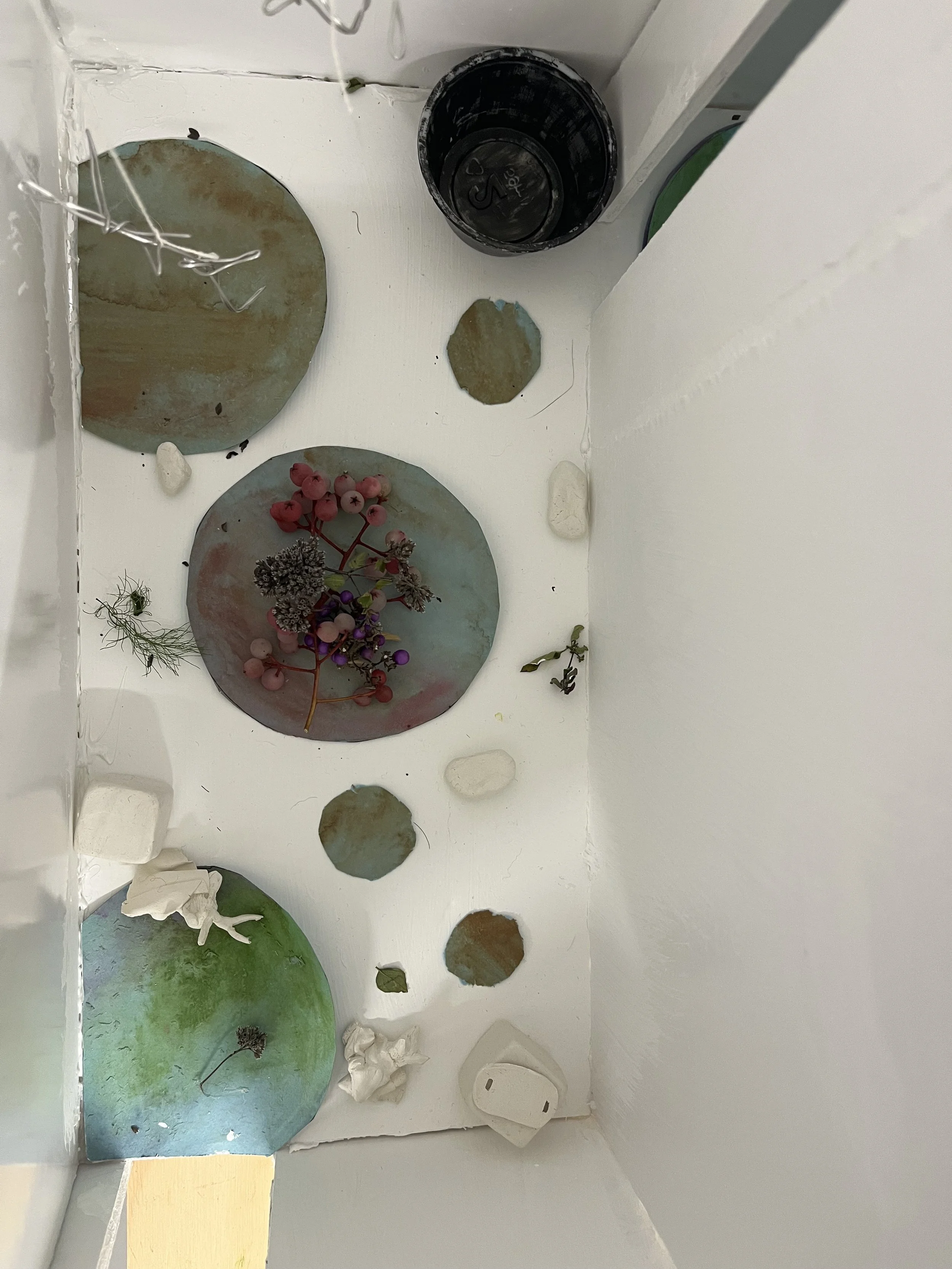
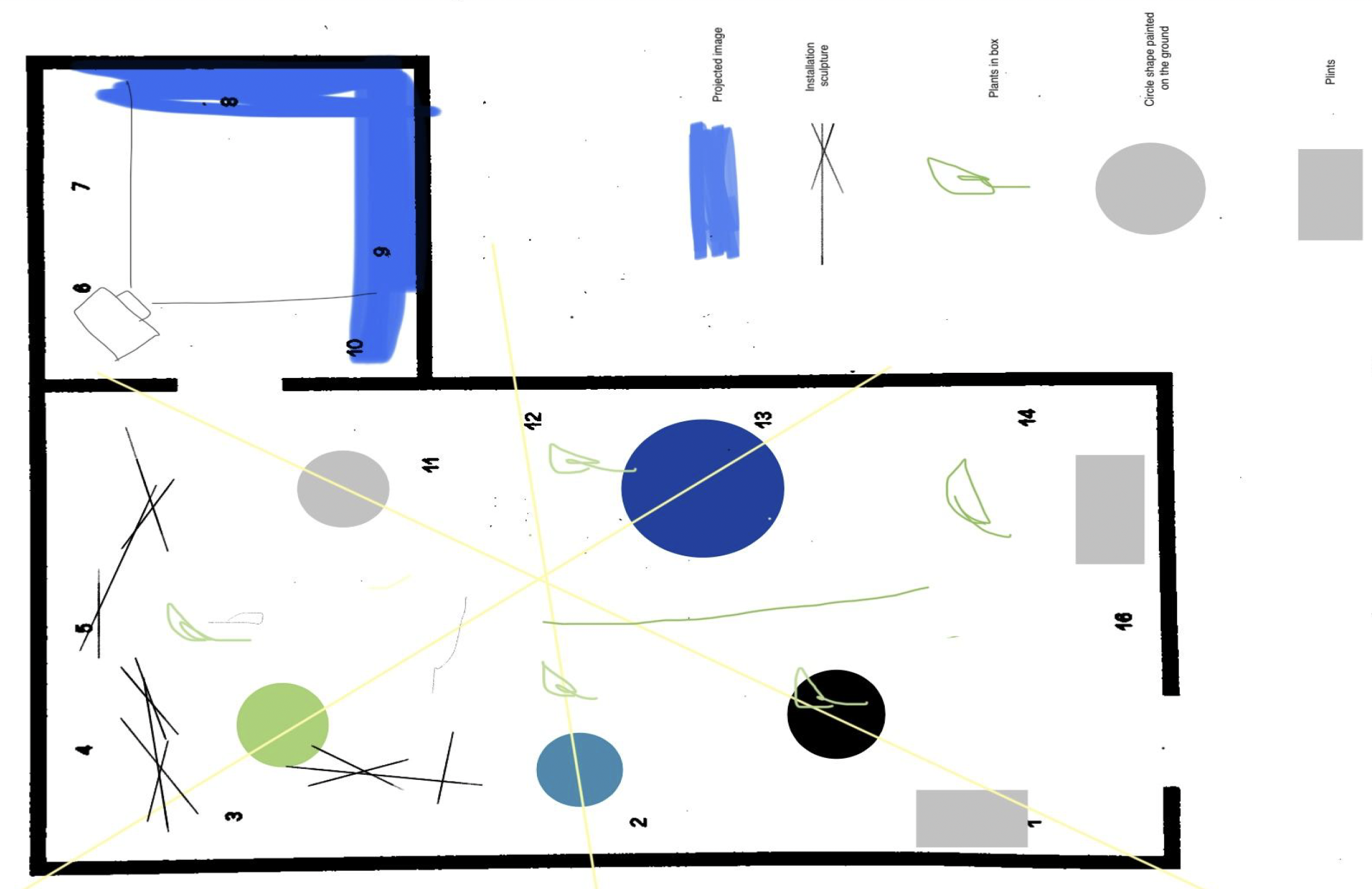
Curatorial Statement:
Existence is Fluid yet Cycles Control brings together four artists whose practices examine the structures (material, perceptual and invisible) that quietly determine how we move through the world. The exhibition proposes that life unfolds not only through fluid experience but also through cyclical, often algorithmic patterns that govern perception.
By showcasing works that appear on first sight to be modest and familiar, the exhibition invites viewers to encounter the mundane not as neutral territory, but as an active site that creates meaning. The exhibition positions everyday objects, subtle spatial cues and a variety of mediums in ways that re-imagines them as extensions of our lived consciousness. Each artist contributes a mode of seeing that disrupts linear narratives of loops, rotation and recursive observation. What reveals itself is an environment wherein the ordinary becomes estranged just enough to reveal the systems behind it, balanced with an aesthetic excitement felt from within. Existence is Fluid yet Cycles Control establishes a contemplative space that reveals the unseen — habitual movement, subconscious interpretation, cultural assumptions and memory.
Rooted in Vancouver’s strong lineage of post-conceptual and material-based practices, the exhibition acknowledges the city’s history of photographic inquiry while extending the conversation into more spiritual terrain. Here, perception is not merely optical; it is atmospheric, embodied, and infrastructural. When so much of contemporary life is mediated through data, repetition, and filtered experience, the exhibition asks us to consider what it means to truly observe? And if our interpretations are shaped by algorithms (social, emotional, technological), can they ever be neutral?
Joachim Koester’s practice traces the edges of the visible, mapping the unseen forces that structure behaviour. His works often function like fragments of rituals or instructions, mediating the porous boundary between body and environment. Katie Ohe contributes a kinetic sensibility grounded in circularity: her smooth, continuous movements offer a physical metaphor for cycles that anchor yet liberate perception. Abbas Akhavan’s delicate, yet politically inflected, installations highlight how power subtly shapes the spaces we inhabit, while Liz Magor’s sculptural works reveal the psychological residues embedded in ordinary objects. Symbiotically, their practices create an ecosystem of quiet interruptions. Works that seem approachable yet, upon deeper engagement, destabilize assumed understandings. Through material play, repetitive motion, or indexical traces, each artist foregrounds how lived experience is simultaneously fluid and conditioned by recurring structures.
Ultimately, the exhibition invites viewers into a personal encounter with various cycles — those inherited, habitual, and self-constructed. It asks visitors not only to look, but to notice how they look. In doing so, it reveals that meaning lies not solely in the visible artwork itself, but in the subtle infrastructures that frame our capacity to perceive.
Artworks:
Liz Magor
Buck (Jägermeister)
2008
Polymerized gypsum, liquor,
16 x 30 x 26 in
Liz Magor
Cigarette Dough
2008
Latex, pigment, cigarette butts, fabric, mold-formed dough-like structure
16 x 30 x 26 in
Joachim Koester
The Way In Is the Way Out
2007
HD video (16 mm transferred to digital)
Abbas Akhavan
Fountain
2022
Plastic bin, mirror, pond pump, tubing, water, snail mucin serum, galantamine
41 x 24 x 19 in
Katie Ohe
Circular Resonance
2003
Kinetic sculpture, aluminium and steel
120 x 80 x 80 cm
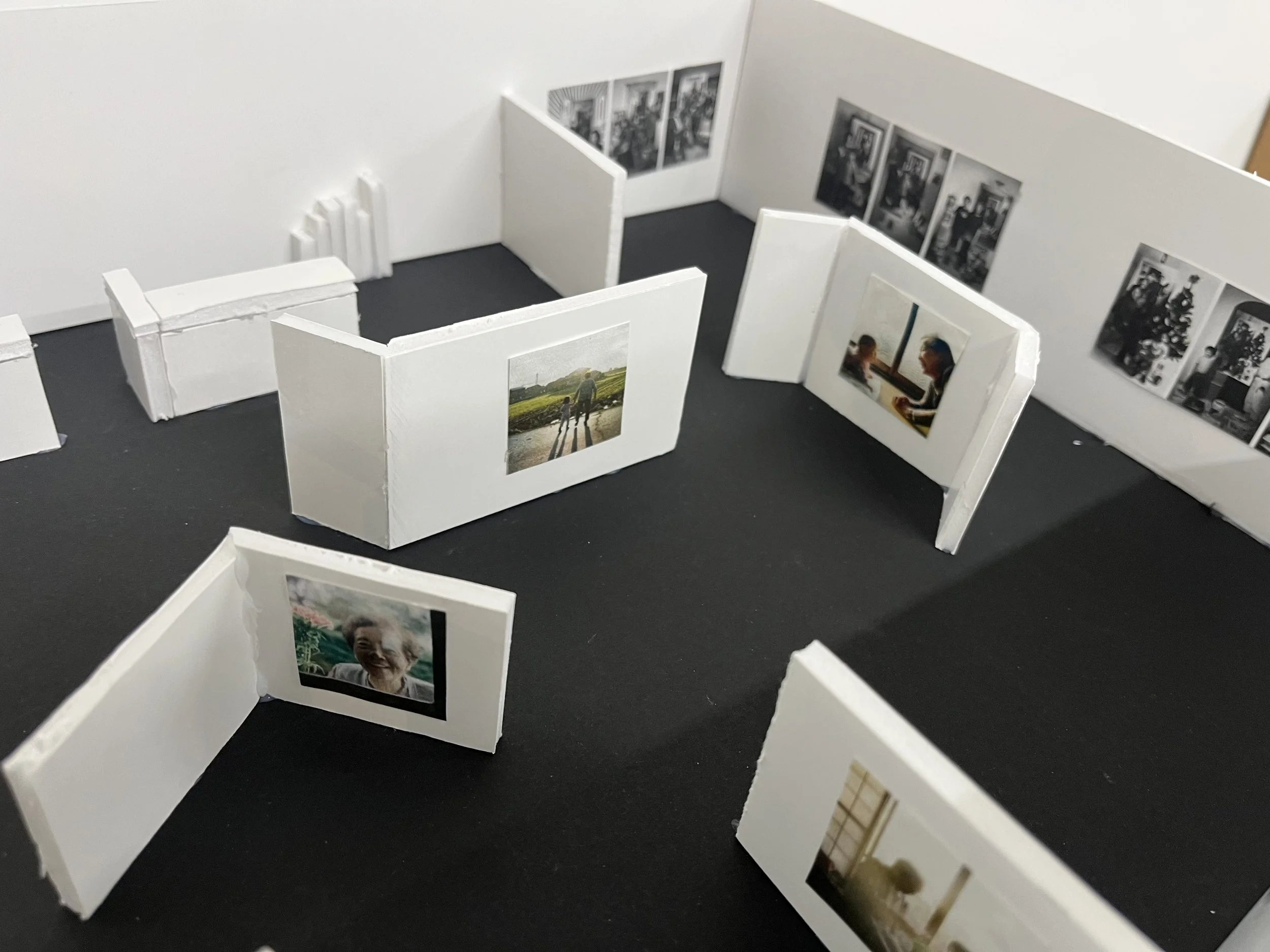
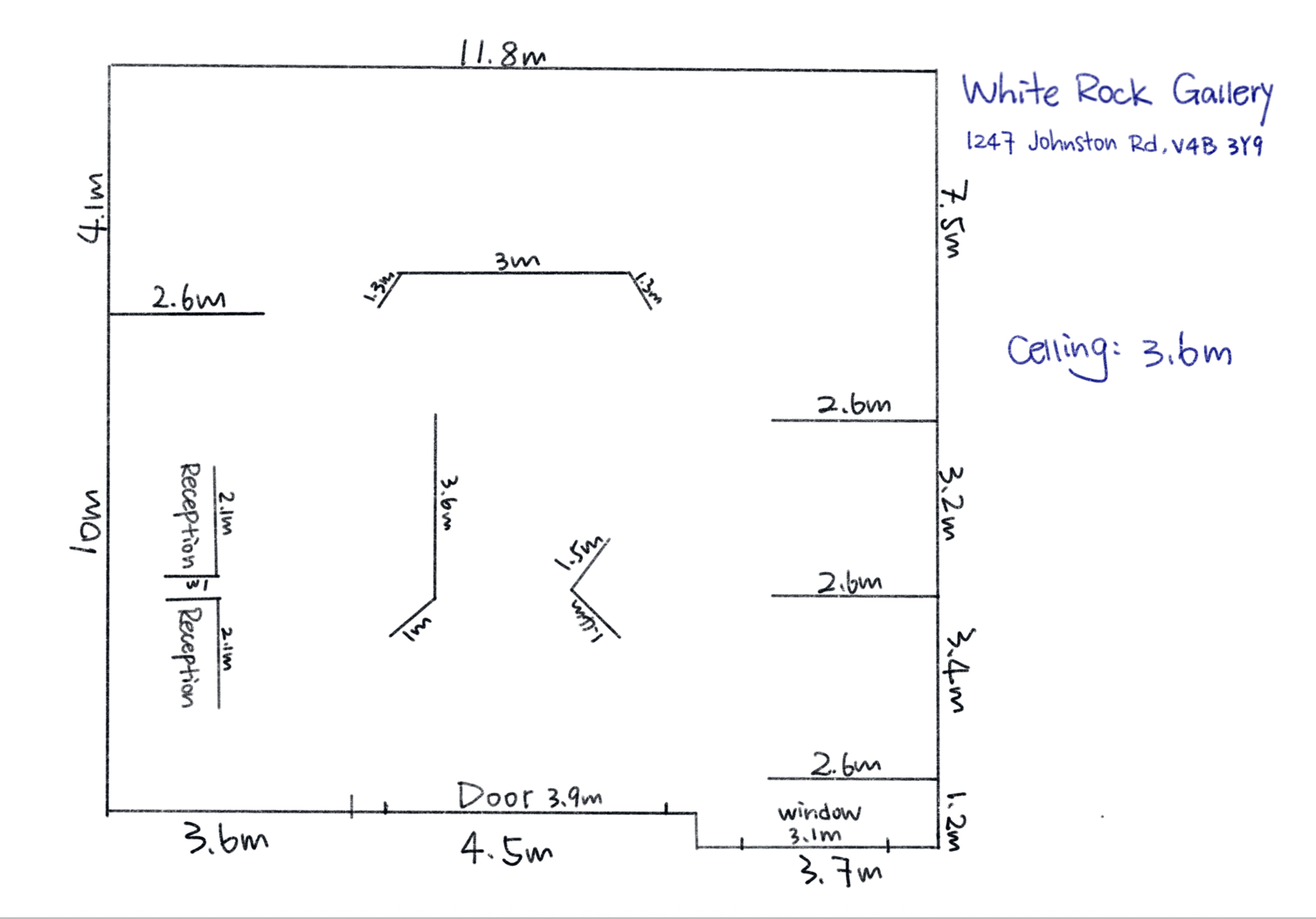
Fragments of Home is an exhibition that brings together photography, memory, and the quiet emotions found in ordinary life. Featuring the works of Kazuyuki Kawahara and Annie Hsiao-Ching Wang, the exhibition looks at how images can hold time and preserve the small details that shape our sense of belonging. This curatorial project also grows from my own experience of living away from home, and how photography helps me stay connected to both my past and my present. As an illustration student whose interests have shifted toward photography, I have found that the camera allows me to observe the world slowly and patiently. It also helps me understand who I am in a new environment.
The exhibition begins with the idea that family memory is never a single narrative. It is made of fragments. Gestures, routines, and quiet interactions that form our emotional understanding of home. Kawahara’s long-term documentation of his grandmother and daughter shows this clearly. His images do not aim for dramatic stories; instead, they reveal the subtle passing of time in domestic spaces. Each photograph becomes a gentle record of care, aging, and continuity. In contrast, Wang’s project, The Mother as a Creator, uses a conceptual structure to explore identity over time. Her yearly portraits, expanding frame by frame, trace how the roles of mother, artist, and individual shift together. Her work suggests that identity is something that grows slowly, through repetition and relationship.
As I developed this exhibition, I realized that these two practices also speak to a broader experience of identity. For many people who live between places, including myself, daily moments often become anchors. A certain kind of light, a familiar routine, or a small domestic detail can hold emotional weight. These fragments remind us of where we come from, while also helping us recognize who we are becoming. In this sense, the exhibition is not only about memory and family, but also about how identity is shaped through time and carried across distance. Photography becomes a tool for grounding ourselves when we are navigating different cultures, environments, and stages of life.
White Rock Gallery is an intimate space that supports this atmosphere. Its soft, natural light and modest scale create a quiet setting for viewers to spend time with the images. These can encourage the audience to move gently through the space and reflect on their own memories those that have stayed with them, and those that continue to shape their identity.
Fragments of Home invites the audience to consider how images hold emotional traces, and how the smallest details of daily life can become meaningful markers of who we are. By bringing together Kawahara’s emotional documentary, Wang’s evolving timeline, and my own search for belonging, the exhibition presents photography as a medium that carries memory, connection, and identity across time.
Artworks:
Annie Hsiao-Ching Wang
The Mother as a Creator
2001-2022
Photographic Series
23 1/2 x 15 5/8 inches
Kazuyuki Kawahara
Here, I sow the seeds
2016
Photography (Ink Jet prints)
20 x 20 inches
Curatorial Statement:
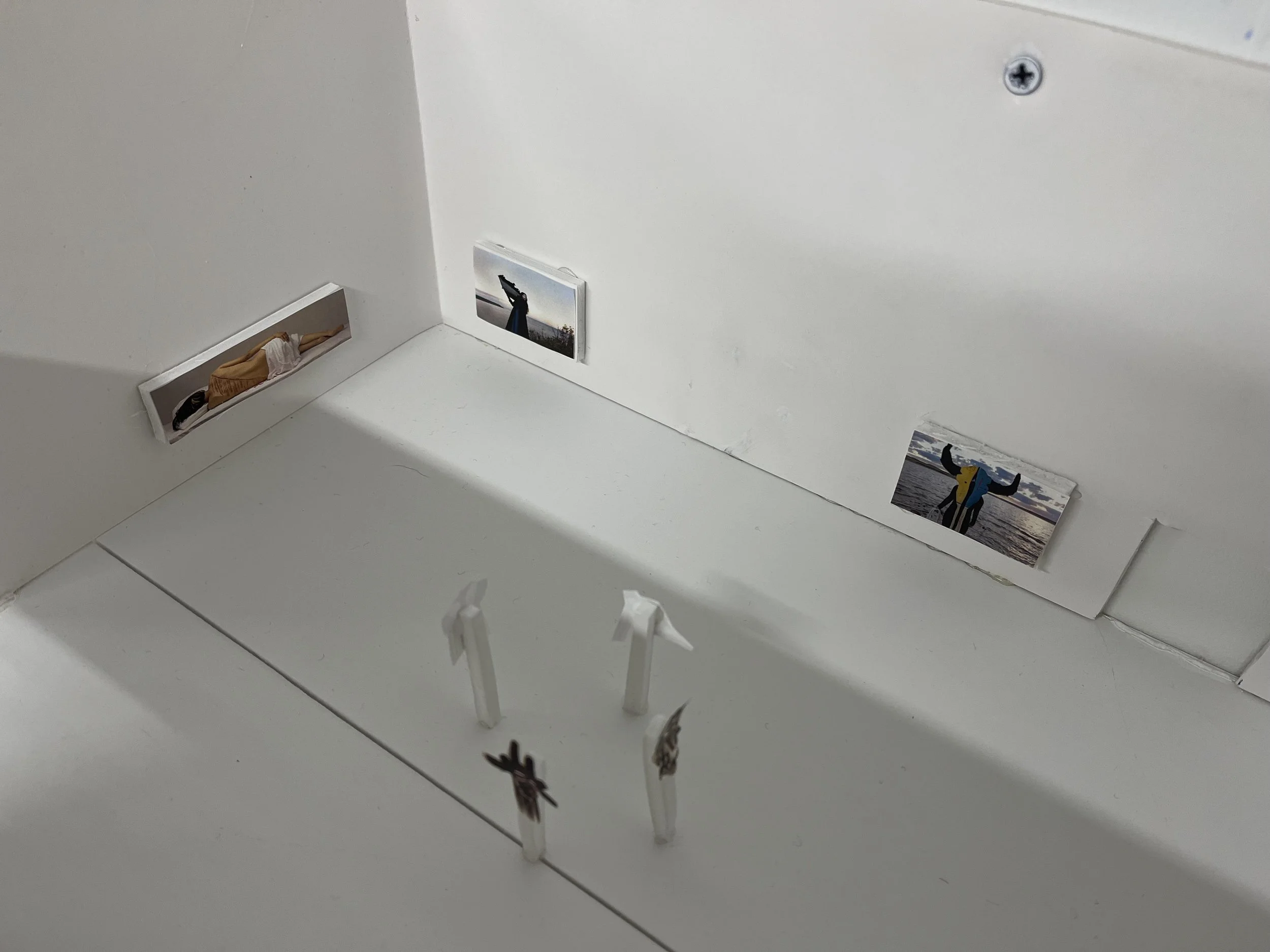
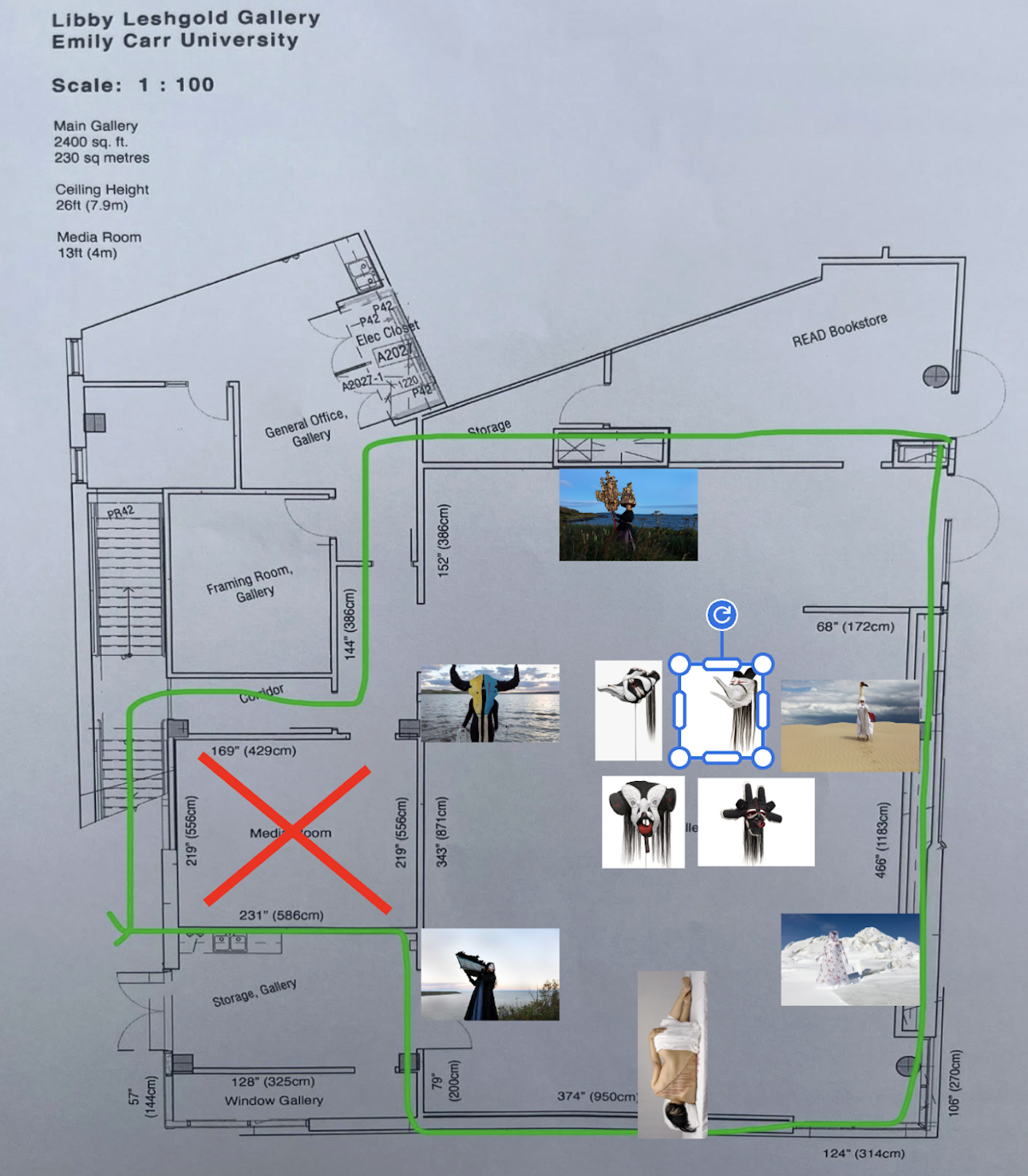
Onion is an exhibition proposed for the Libby Leshgold Main Gallery at Emily Carr University of Art and Design — a space whose openness and lack of internal walls invite movement, dialogue, and exchange. Situated at the entrance of the university, the Leshgold Gallery serves not only as a site for viewing art, but also as a vital pedagogical space where students and others encounter contemporary practices, artist talks, and symposia. Its commitment to fostering public engagement, generating new conversations around contemporary art, and featuring Indigenous culture and history makes it an ideal setting for this exhibition.
Onion explores a variety of Indigenous identities through the layered metaphors of the onion: cultural complexity, endurance, and interconnectedness. The onion’s structure becomes a symbol for the multiple histories, perspectives, and lived experiences that shape Indigenous communities. Its association with eternity reflects the enduring strength of Indigenous cultures, which persist and flourish despite centuries of displacement, colonial violence, and cultural erasure.
Featured in the exhibition is the work of Rebecca Belmore (Fringe), Brian Jungen (Prototype for new understanding #4, #5, #7, #8) and Meryl McMaster (Cartography of the Unseen, What Will I say to the Sky and the Earth II, On the Edge of This Immensity, Calling Me Home, Harbourage For a Song) are featured in this exhibition.
Across these artists’ practices, stitching becomes an action of making, repairing, and reconfiguring—a shared language of assembly. Rebecca Belmore’s Fringe uses stitching directly: the red beadwork resembles sutures along a wound, referencing bodily trauma while visually “mending” it. Brian Jungen, while not using thread in a traditional textile sense, “stitches” together Nike Air Jordans into forms modelled after Indigenous masks with the colour palette of the Northwest Coast First Nations. Meryl McMaster incorporates stitching through her construction of elaborate garments in the Plains Cree (nêhiyaw) tradition, and her work often echoes the forms, motifs, and symbolic resonance of Indigenous ceremonial regalia.
Onion brings these practices together to highlight the ways Indigenous artists continue to build, repair, and reimagine cultural knowledge across generations. Through the layered metaphor of the onion, the exhibition foregrounds how identity is continuously revealed by personal and collective history. In the open architecture of the Leshgold Gallery, these works invite viewers to move through the show's layers both physically and conceptually, encountering stories of resilience. Ultimately, Onion asserts that Indigenous culture is not static but continually revitalized through acts of making, stitching, and storytelling—gestures that bind past to present and strengthen the future.
Art Works:
Brian Jungen
Prototype for New Understanding #4
1999
Sculpture
18 x 13 x 7 in
Brian Jungen
Prototype for New Understanding #5
1999
Sculpture
9 x 11 x 2 in
Brian Jungen
Prototype for New Understanding #7
1999
Sculpture
11 x 14 x 22 in
Brian Jungen
Prototype for New Understanding #8
1999
Sculpture
23 x 8 x 15 in
Meryl McMaster
Cartography of the Unseen
2019
Photography
40 x 60 in
Pierre-François Ouellette art contemporain
Meryl McMaster
What Will I say to the Sky and the Earth II
2019
Photography
40 x 60 in
Meryl McMaster
On the Edge of This Immensity
2019
Photography
40 x 60 in
Meryl McMaster
Calling Me Home
2019
Photography
40 x 60 in
Pierre-François Ouellette art contemporain
Meryl McMaster
Harbourage For a Song
2019
Photography
40 x 60 in
Pierre-François Ouellette art contemporain
Rebecca Belmore
Fringe
2008
Photography
32 x 96.4 x 6.6 in
Curatorial Statement:
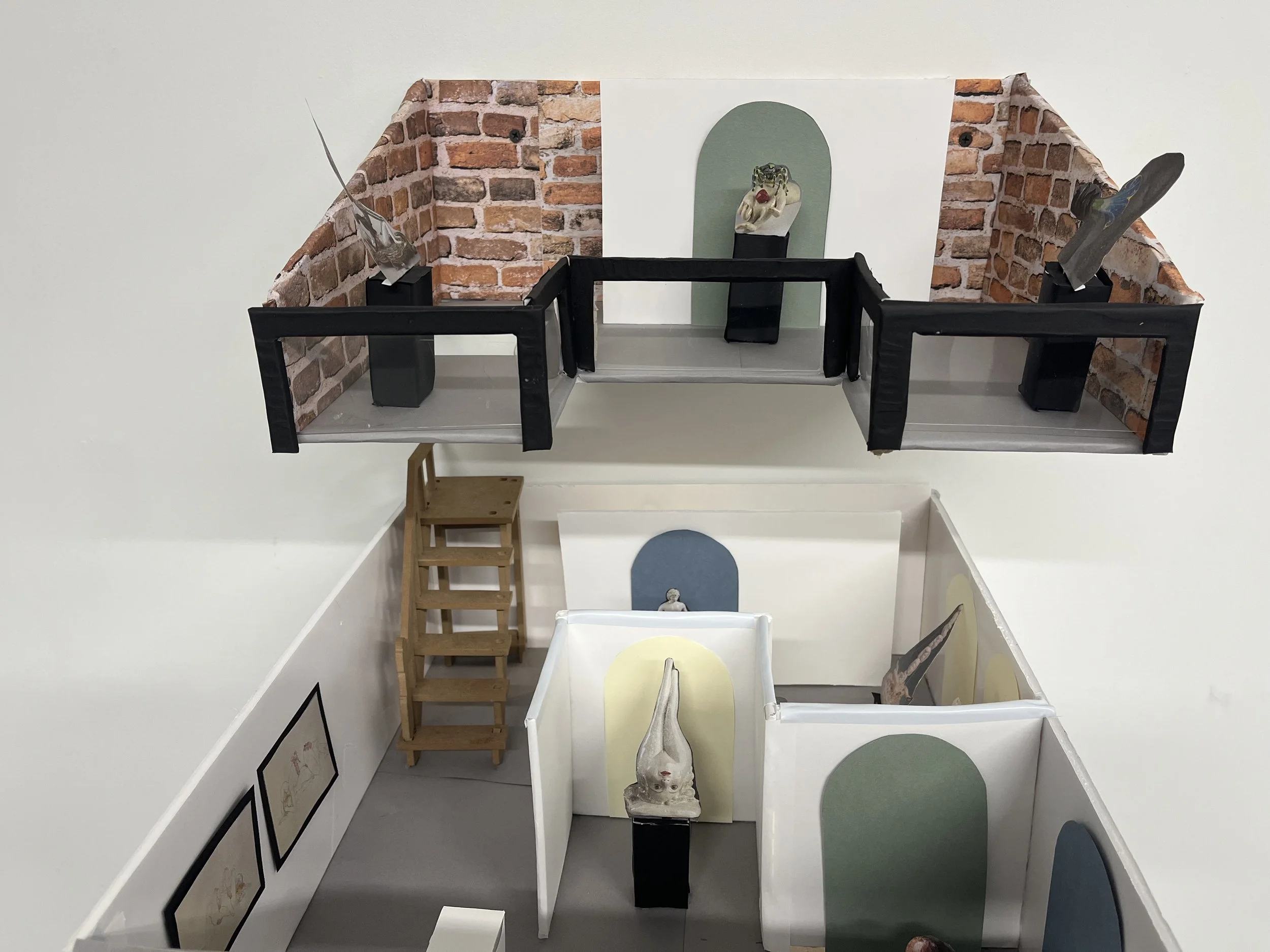
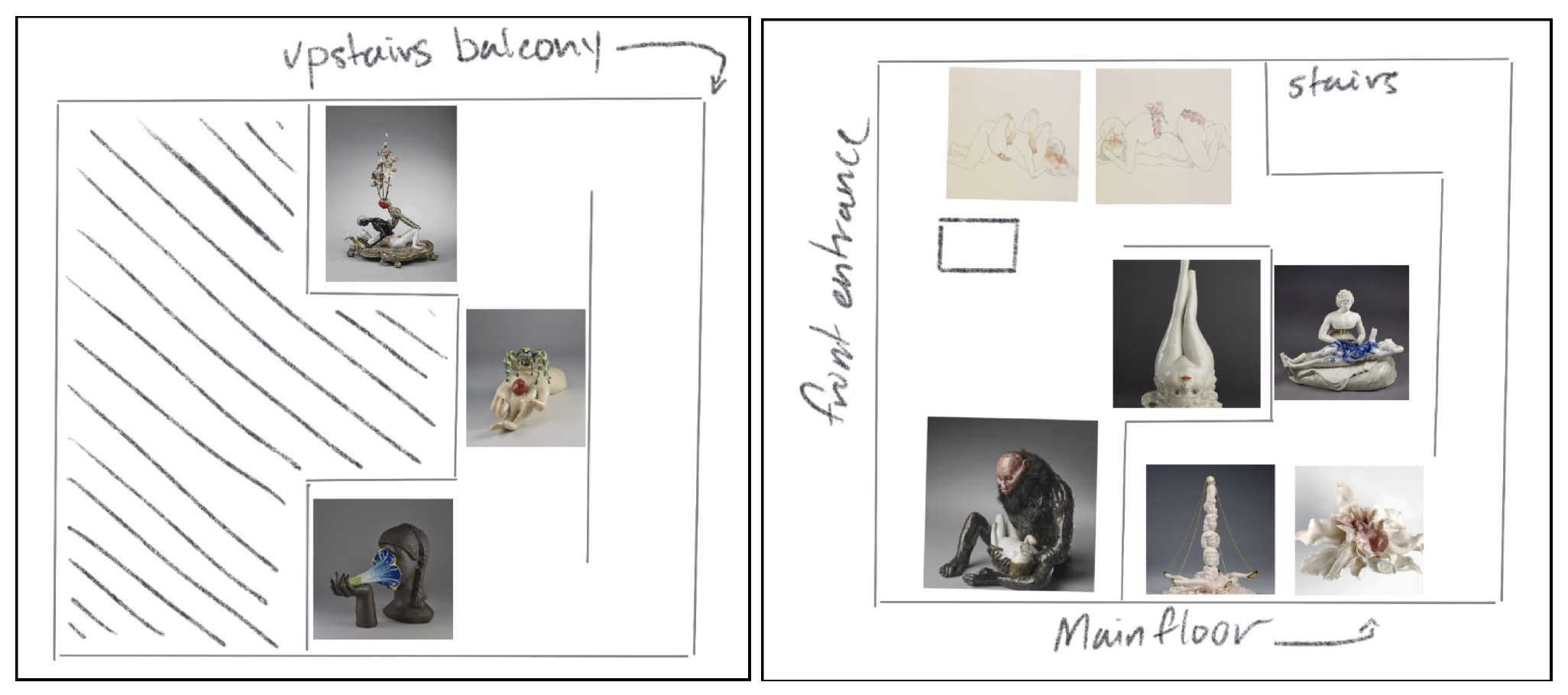
Cica presents a collection of work by renowned Canadian artist Shary Boyle in an exhibition that explores themes of femininity, sexuality and the body, through an aesthetic lens that draws from art movements such as surrealism and the Bauhaus.
On display from November 28th, 2025 to February 14th, 2026 are ten works by Boyle, including eight sculptures and two drawings curated by Jacqui Solnordal. The exhibition addresses themes of femininity and sexuality, as well as responding and playing with the social histories of different art mediums, shedding light on how we judge art styles and mediums based on their historically practiced gender, education, and ethnic background. The exhibition title “Doll Parts” references her practice in making ceramic figures often in the female form, but also often disfigured, warped, or defaced, which is where the “Parts” comes in. While owned and operated by Tony Hui Cao, CICA is mainly a women-run space which further aligns with Shary Boyle's practice that places women-oriented issues as the focal point of a good portion of her work, particularly dealing with themes of femininity and sexuality. Some key works in this show are Inverted Fetish (2017), which stays on theme with an objectified and eerie portrayal of the female form, and Uakori (date?) which also plays at those same ideas but also has undertones of folk art vs European academia as seen in her Scarecrow (2010). Shary Boyle represented Canada in the 55th Venice Biennale in 2013 and has exhibited nationally and internationally for over two decades. Her exhibition Outside a Palace of me was shown in New York and Vancouver in (year?). We are excited to have her back in Vancouver at CICA.
See the show at: 228 Abbott St, Vancouver BC.
Artworks:
Shary Boyle
Spider Monkey
2002
Graphite and gouache on paper
28 x 39 cm
Shary Boyle
Pink Russian
2002
Graphite and gouache on paper
28 x 39 cm
Shary Boyle
Inverted Fetish
2017
Porcelain, pigment, china paint
34 x 16 x 14 cm
Shary Boyle
Raspberry
2019
Porcelain, gold lustre
50cm x 20cm x 20cm
Shary Boyle
Uakari
2014
Porcelain, china paint, fur
21 x 26 x 25 cm,
Shary Boyle
Moths Drink Tears
2014
Porcelain, china paint, bronze. 45 x 34 x 22 cm
Shary Boyle
Museum Nights
2017
Porcelain, pigment, gold lustre
24 x 34 x 20 cm,
Shary Boyle
Trumpet
2018
Stoneware and porcelain
40 x 22 x 41 cm
Shary Boyle
Venusblumen
2009
Porcelain, china paint
15 x 15 x 15 cm
Shary Boyle
Maypole
2010
Porcelain, luster, gold chain
21 x 21 x 23 cm
Curatorial Statement:
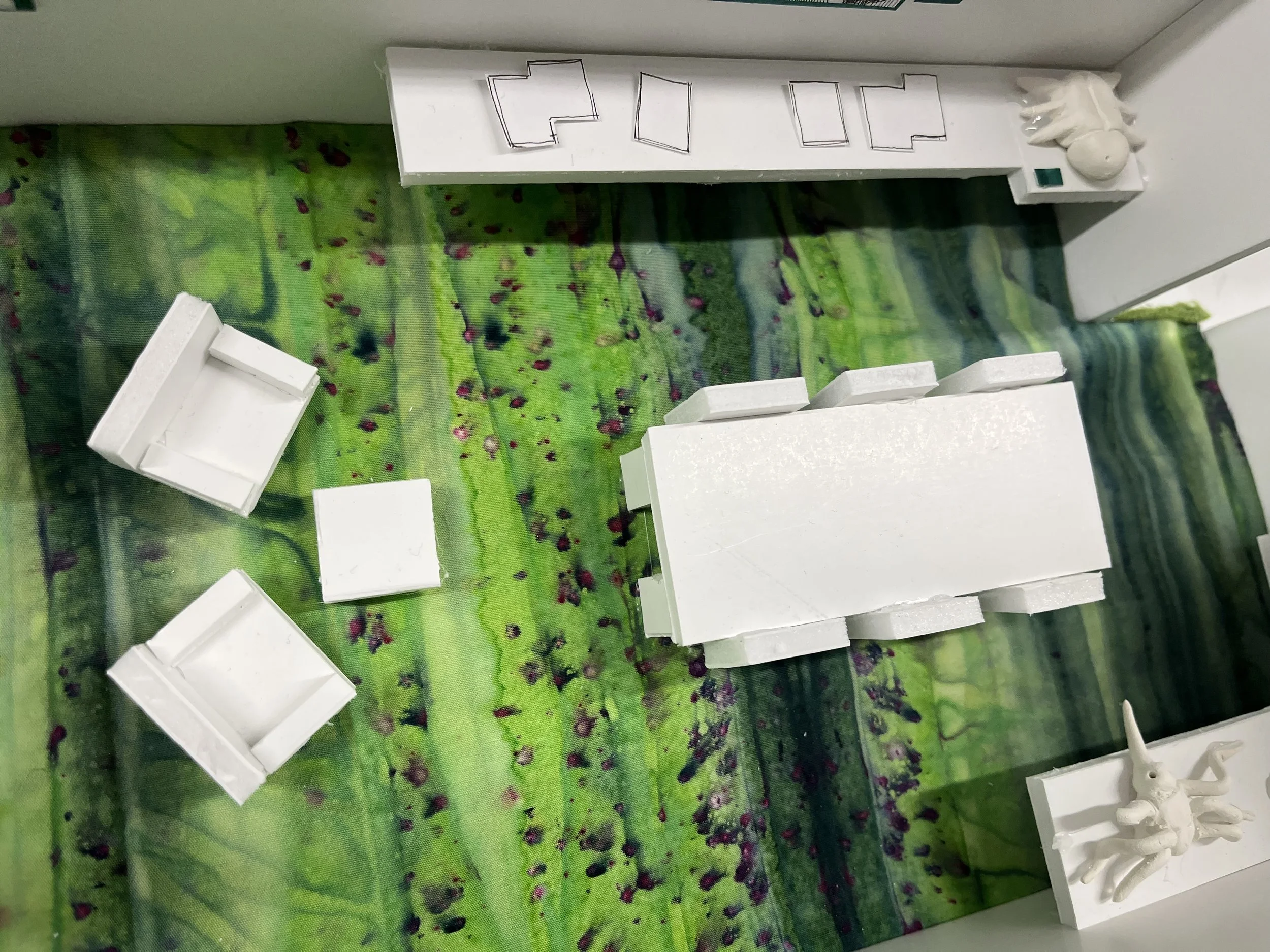
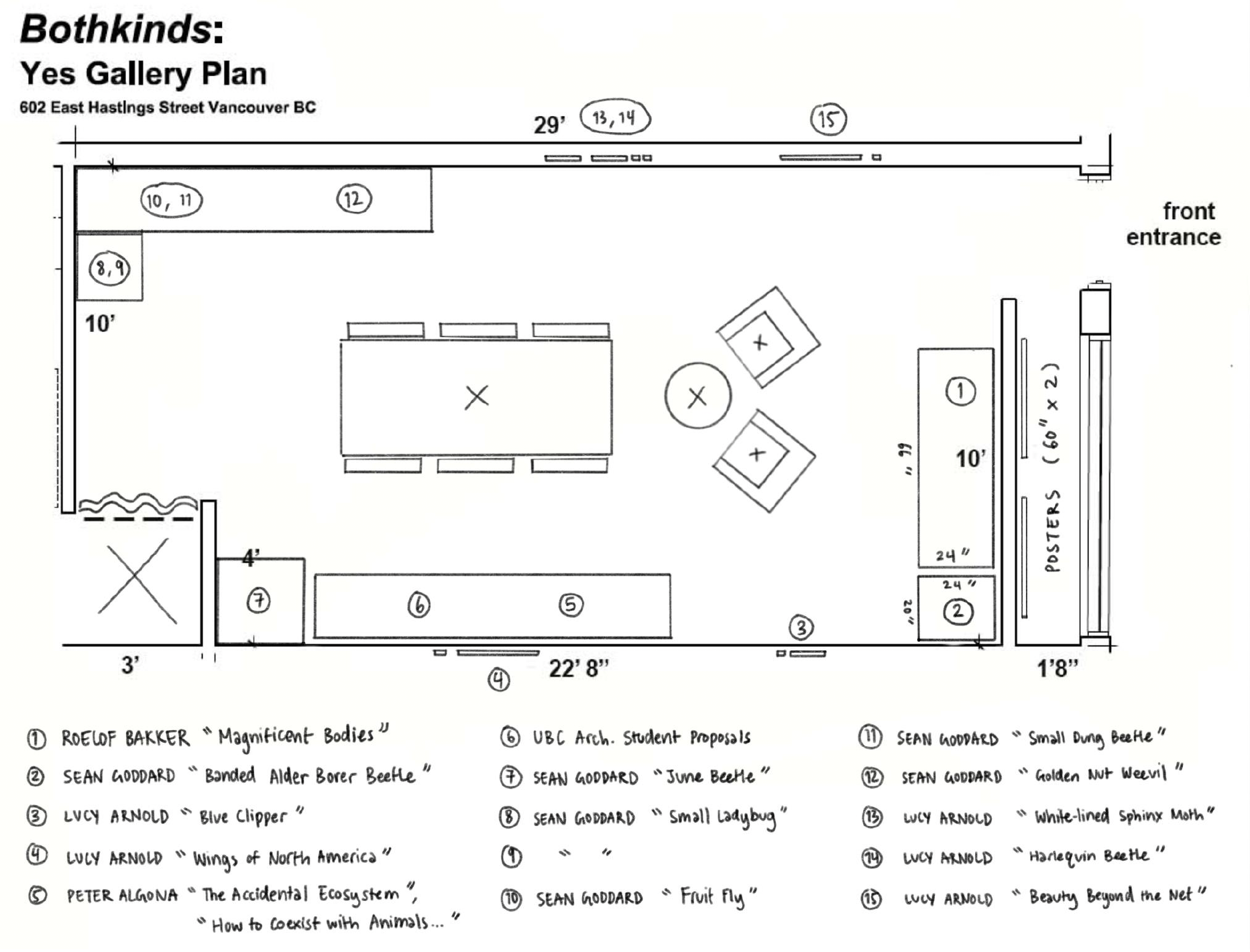
This immersive and intricate exhibition will spotlight the covert world that exists under our very feet — the wondrous world of insects. As if transporting us to a new world, the gallery will be transformed into a valley of an arthropod’s domain, inviting the audience to expand their perspective to that of our tiny critter friends that ordinarily go unnoticed or are thought of as hindrances. The gallery will suggest the possible rethinking or reformation that human beings can bring forth to build an environment beyond the anthropocentric mindset. The Anthropocene is not a mindset that can be turned on and off — the modern landscape has always catered towards and for humankind. From the very beginning of mankind, our narrative has been absolute. The exhibition will feature readings by author and thinker Peter Algona, who suggests the idea that perhaps, the closest we can get to being completely untethered to the Anthropocene is to truly understand that "coexistence is about care, not control" (Algona, Embracing the Wild, pg.210).
Hidden Critters: A Pocket Populace will include artworks and writing excerpts from the following artists/authors: Lucy Arnold, Peter Algona, Roelof Bakker, Sean Goddard, and the
proposal projects of UBC Architecture Undergraduates.
The works of the featured artist will invite the audience to admire the beauty of the critters. While Lucy Arnold’s illustrative works will carry out the narrative of our insect residents climbing the gallery walls, the sculptural works of Sean Goddard will supply the viewer with a 3-dimensional outlook of the critters. The almost echo-like prints of Roelof Bakker’s Magnificent Bodies (2024) will not only grieve the passing of the featured insects but also serve as a beautiful reminder that they, too, had once existed. After viewing the visual components of the exhibition, viewers will be encouraged to read the readings from Peter Algona and the projects of the UBC Architecture class, which propose architectural structures that can be implemented in the modern cityscape, that may aid/promote the survival of insects. A quiet, humming audio will play in the background to promote the immersive detail of the exhibition.
The aim of the exhibition is not to change one’s existing disdain or prejudice about insects, but rather to have them reevaluated and redefined. The Anthropocene will continue as long as humankind exists on Earth. The gallery’s message is to encourage the viewer to continue to question. How can we be better? Do better? Hidden Critters: A Pocket Populace will create an open, safe environment for visitors of all ages and knowledge levels to collaborate with fellow thinkers–or, to simply admire the incredible world that lies below our very feet. In the continuation of holding these exhibitions and having these conversations, we can begin to recognize our heterogeneous populace of living organisms.
Artworks:
Lucy Arnold
Beauty Beyond the Net
Year: N/A
Watercolour on paper
21” x 25”
Lucy Arnold
Blue Clipper
Year: N/A
Watercolour on paper
9” x 13”
Lucy Arnold
Harlequin Beetle
Year: N/A
Watercolour on paper
9” x 13”
Lucy Arnold
White-lined Sphinx Moth
Year: N/A
Watercolour on paper
9” x 13”
Lucy Arnold
Wings of North America
Year: N/A
Pastel on paper
22” x 30”
Peter Algona
The Accidental Ecosystem: People and Wildlife in American Cities
2022, Chapter: “Embracing the Urban Wild”) & “How to Coexist With Animals in Cities” (2022, Bloomberg article)
Note: see proper bibliographic citation style guides.
Roelof Bakker
Magnificent Bodies
2024
Archival book
17” x 12.5”
Sean Goddard
Banded Alder Borer Beetle
Date: N/A
Glass, metal
30” x 6.5” x 28”
Sean Goddard
Fruit Fly
Date: N/A
Copper, glass
6” x 2.5” x 5.5”
Sean Goddard
Golden Nut Weevil
Date: N/A
Copper, glass, metal
6” x 12” x 15.5”
Sean Goddard
June Beetle
Date: N/A
Copper, steel
20”x 20”
Sean Goddard
Small Dung Beetle
Date: N/A
Copper, glass, metal
4.75” x 4.75” x 9”
Sean Goddard
Small Ladybug
6” x 2.5” x 5.5 x2
UBC Architecture Undergraduates: proposal projects
Curatorial Statement:
The Shake Eating its Own Tail, curated by Shade McInnes, and hosted at the Gordon Smith Gallery of Canadian Art, explores themes of environmentalism within the context of climate change’s effect on Canadian landscapes. This exhibition narrows in on the competing cycles of humanities drive towards continuous and expansive consumption, and the natural cycle of renewal in the environment that same overconsumption is disrupting. Featuring artists: Susan Edgerley, Geoff Phillip, Dwayne Martineau, Christi Belcourt, Kenojuak Ashevak, Gavin Lynch, and J. E. H. MacDonald; this multimedia and multi-generational exploration of Canadian art walks the delicate balance of making space for conversations around climate change that are honest but not nihilistic.
Across the country, many of Canada’s top contemporary landscape artists are warning about the dangers to nature from agriculture, industrialization and climate change, those represented here are only a fraction of this continuously expanding movement. “Landscape painting has really never been more important than it is now. It’s a reminder of what is at stake,” as Gavin Lynch so eloquently put it. Gavin Lynch and Geoff Philip use landscape painting to explore unique landscapes across the country that are increasingly at risk of disappearing entirely. Conversely, Christi Belcourt’s considerably more abstract interpretations of landscapes depict the reciprocal relationships that make up a thriving ecosystem, presenting a framework of how we can move forward, “We have the power to remake the kind of world, the kind of future, we want,” she has said.
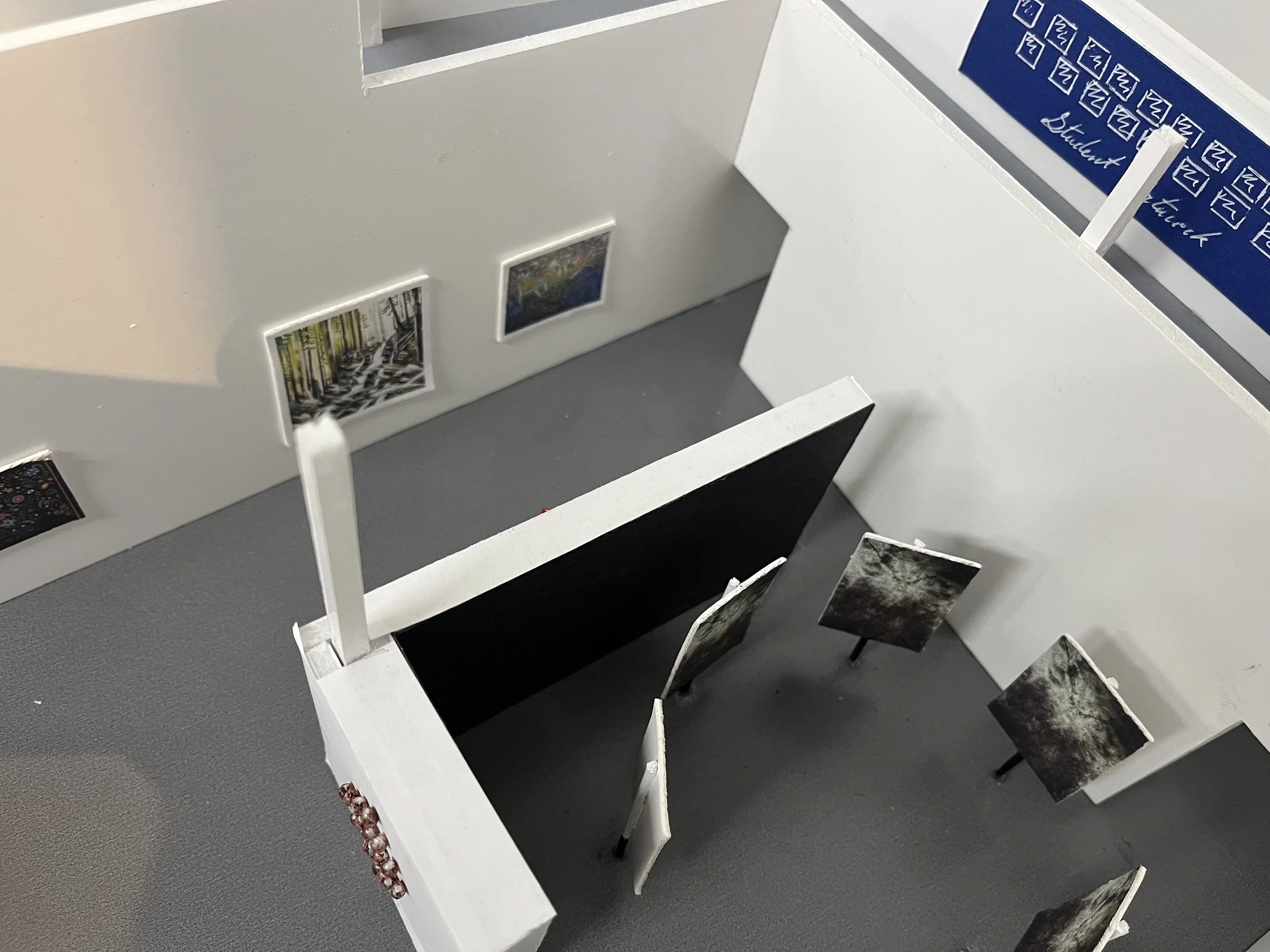
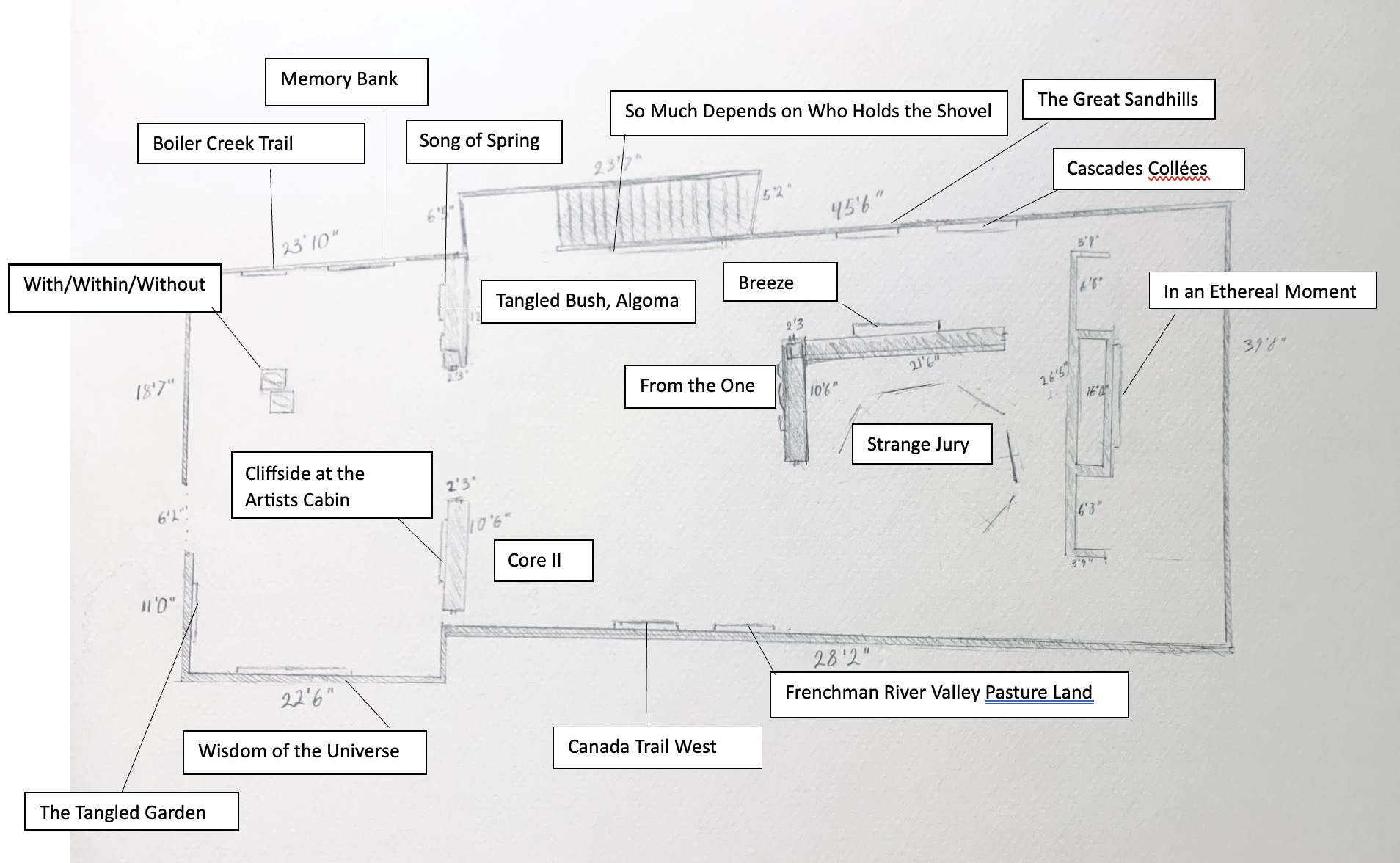
The main floor of the gallery can be walked through as a cycle: exploring first, the historical movement of Canadian landscape painting, progressing through themes of fragility and the great beauty we stand to lose through our negligence, before being confronted by the judgement of nature’s Strange Jury, and are finally comforted by the return to the cycle of rebirth in an Ethereal Moment.
The themes of this exhibition work in tandem with The Gordon Smith Gallery of Canadian Art’s mission to invite students and young artists to engage with Canadian art as a means to educate, inspire creativity, and make connections. The Snake Eating Its Own Tail is designed to make the complex conversations surrounding climate change and sustainable ecological practices accessible and engaging for all ages. Students will be able to engage critically with art historical movements, witness the more contemporary evolution of these historical painting practices, as well as become exposed to innovative modern photography techniques and glass sculptures. While the main floor can be experienced as a self-contained cycle exploring these environmentalist themes, the second floor will showcase student work done in response to the exhibit in Artist For Kids workshops by the sd44 school district. Student work is placed in equal or greater importance to the acclaimed artworks of the first floor, because they are the next generation of artists and the next stage of this cycle whose infinite potentiality will shape the future of our relationship to the environment.
Artworks:
J. E. H. MacDonald
The Tangled Garden
1916
Oil on cardboard
47.8 X 60 IN.
Christi Belcourt
Wisdom of the universe
2014
acrylic on canvas
67.3 x 111 IN.
Geoff Phillip
Cliffside at the Artists Cabin
2017
Oil on canvas
54 x 66 IN.
Gavin Lynch
Memory Bank
2016
Acrylic, watercolour and sand on canvas
48 X 48 IN.
Susan Edgerley
With/Within/Without
1918
Sandcast glass, flamed-worked glass, on black base.
7 x 27 x 12.5 IN.
J.E.H. MacDonald
Tangled Bush, Algoma
1919
Oil on cardboard
8.4x 10.4 IN.
Kenojuak Ashevak
Song of Spring
2006
Lithograph On Paper
33 x 23 IN.
Susan Edgerley
From the One
1994
sandcast glass, copper,
93.5 x 82.6 IN.
Geoff Phillip
The Great Sandhills
2017
Oil on canvas
54 x 66 IN.
Geoff Phillip
Canada Trail West
2017
Oil on canvas
54 x 66 IN.
Geoff Phillip
Frenchman River Valley Pasture Land
2017
Oil on canvas
54 x 66 IN.
Christi Belcourt
So Much Depends on Who Holds the Shovel
2014
acrylic on canvas
48 x 90 IN.
Gavin Lynch
Cascades Collées
2022
Acrylic, watercolour and sand on canvas
72 X 72 IN.
Susan Edgerley
Breeze
2007
flamework glass, wood, and gold leaf
19 x 89 x 5.5 IN.
Susan Edgerley
Core II
1995
sandcast glass, steel, copper, natural fibres
70.9 x 22.4 x 11.8 IN.
Dwayne Martineau
Strange Jury #1
2021
Medium photograph
Support backlit film
82 7/8 × 54 1/8 IN.
Dwayne Martineau
Strange Jury #2
2021
Medium photograph
Support backlit film
82 7/8 × 54 1/8 IN.
Dwayne Martineau
Strange Jury #3
2021
Medium photograph
Support backlit film
82 7/8 × 54 1/8 IN.
Dwayne Martineau
Strange Jury #4
2021
Medium photograph
Support backlit film
82 7/8 × 54 1/8 IN.
Dwayne Martineau
Strange Jury #5
2021
Medium photograph
Support backlit film
82 7/8 × 54 1/8 IN.
Susan Edgerley
In an Ethereal Moment
Glass sculpture
2003
96 x 96 x 7 IN.
Curatorial Statement:
1. “The action of inverting something or the state of being inverted, the inversion of the normal domestic arrangements.” Google.
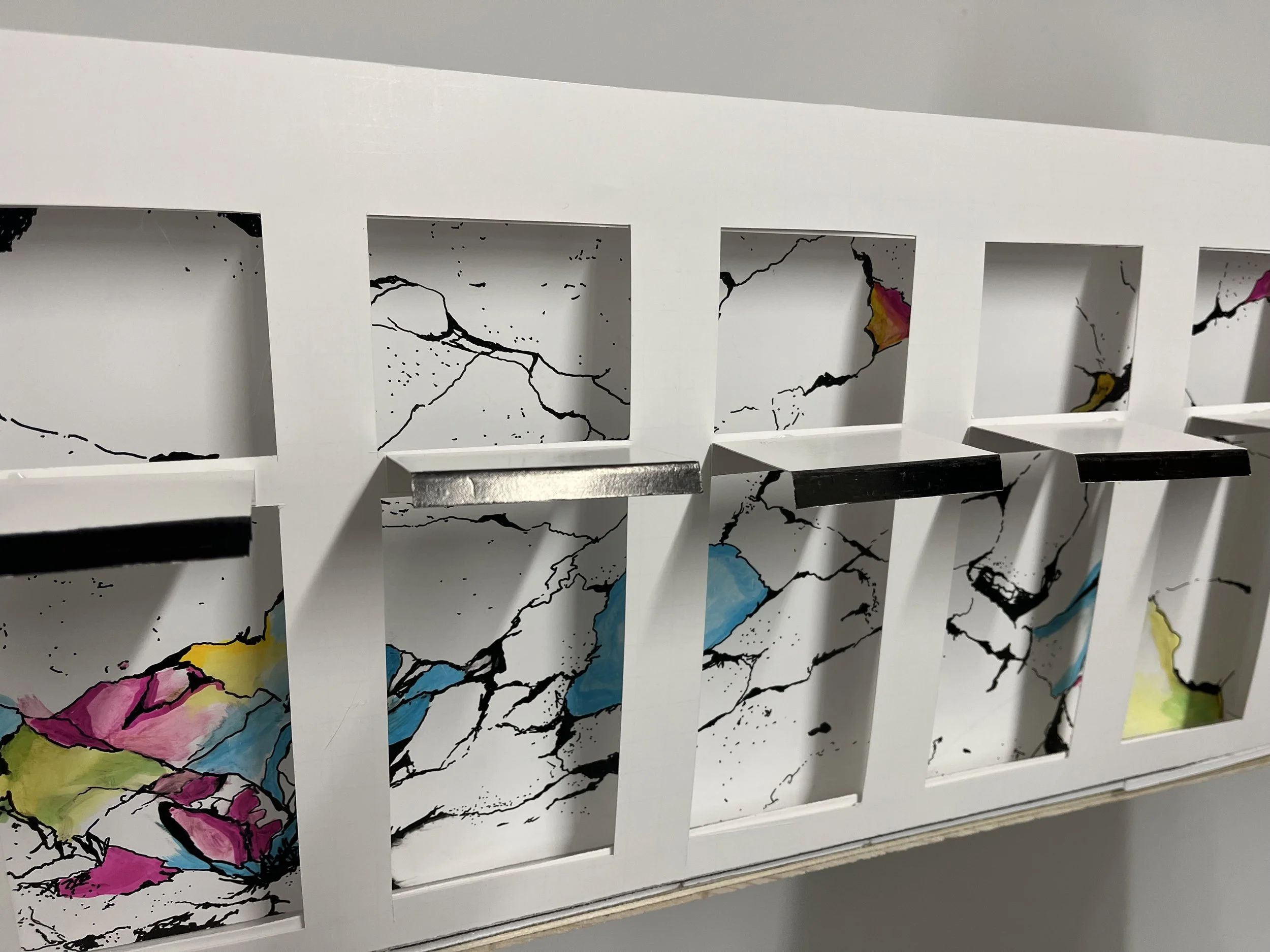
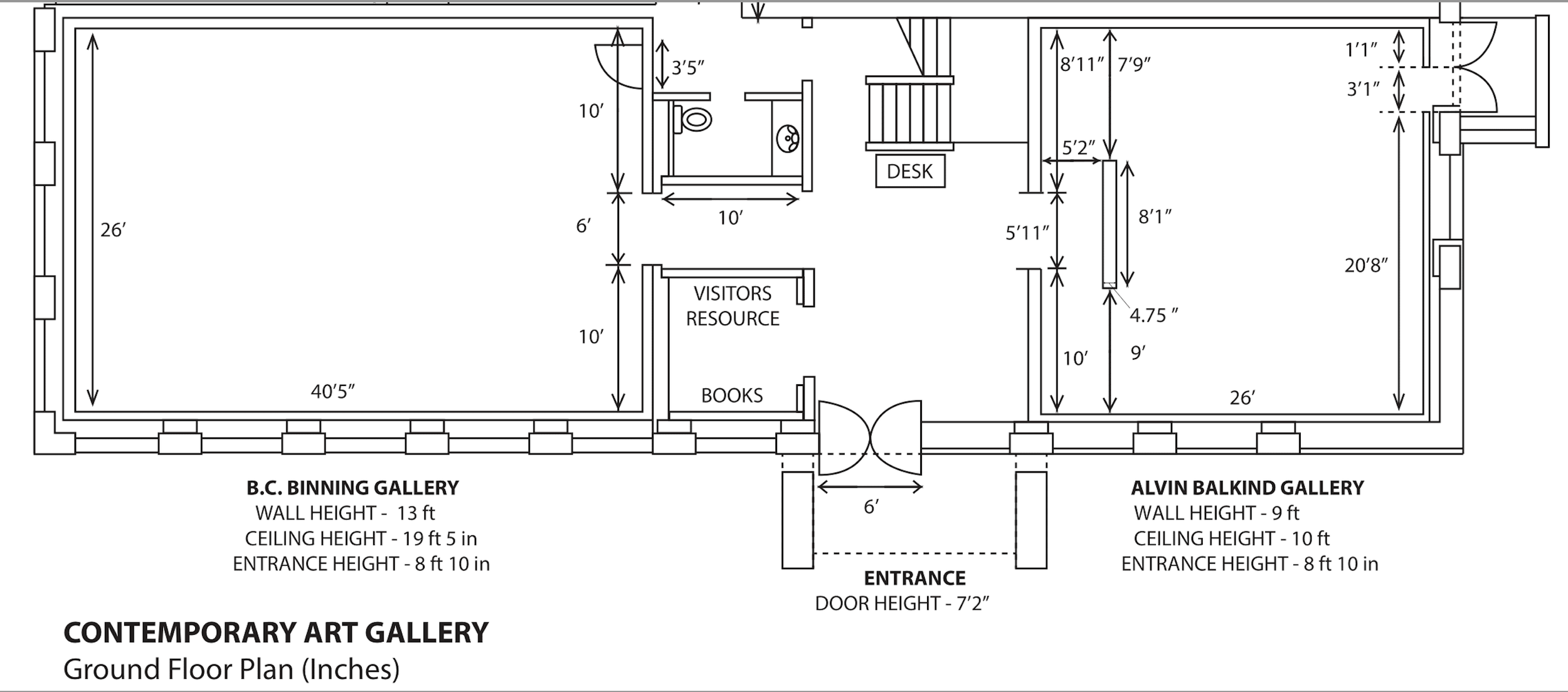
The inversion of a home to be packaged grouped together elements, the inversion of stone, revealing what’s inside, and the inversion of a fountain, the bare metal structure. These three pieces I would like to group together in an exhibition at the Contemporary Art Gallery. To enable the viewer to mentally invite in the impact of either losing a home, having a broken home or no longer feeling part of one, and to ask ourselves where to go from here.
‘One bedroom apartment’ from Liz Magor revolves around the past conglomeration of an unpacked, unfurnished home, ready to be either unpacked or packed up, bringing a temporal aspect of life and home into play. “When there is a shift, an emptying outer move or a collapse, the layers (be it bookshelves or cabinet drawers or the house) move away from each other, revealing their insubstantiality, their provisional and pathetic identity.” There was a moment, it seems, when Magor welcomed this inversion, even provoked it perhaps. One bedroom apartment with its piled storage of such was a way station, there has been too much accumulation. Too many details, too many provisions had piled up during the re-enactor period, it was time to strip down to the basics, bare essentials, with nothing but an overcoat, so to speak, for protection. “Subject to Change, writings about and of Liz Magor.
These thoughts bring us to Abbas Akhavan’s “Spring,” the bare essentials of a fountain, which has become frozen. Freezing a source of water makes one reflect on how society can become frozen, and the immobility of this state. It can also be seen on a very small scale, about how a household can feel once emotions are gone, day-to-day tasks are being made without much thought, and an emptiness and coldness occur.
Which brings us to Zenith’s cracks and fissures. “Fissures and flaws.Surface cracks and deep scars. Tangible pangs: our world is riddled with them. It hints at breaking, splitting, snapping, but this giant rock never caves to its torment. This is an homage to our home and the infinite stone it's yielded us," Zenith.
A play around cracks in the identity of the gallery can be related to losing one’s own identity, whether it be stolen or whether it be an emotional or mental collapse, and brings us to believe in hope. This piece brings us to reimagine the walls in a futuristic setting.
The contemporary art gallery has such a great collection of past exhibits; I hope these works will embellish the already profound, contemporary edge the gallery has been able to create, as well as the ample meaningful conversations it has been able to voice.
Artworks:
Liz Magor
One Bedroom Apartment
1996
Items of a household
Size unknown
Zenith
fissures and cracks
2020
Graffiti
Walls of outdoor gallery windows
Abbas Akhavan
Spring Isn’t the title “Fountain”?
2020
Fountain structure ?
Diameter 3.75m part 2 160 x 160 x 80cm
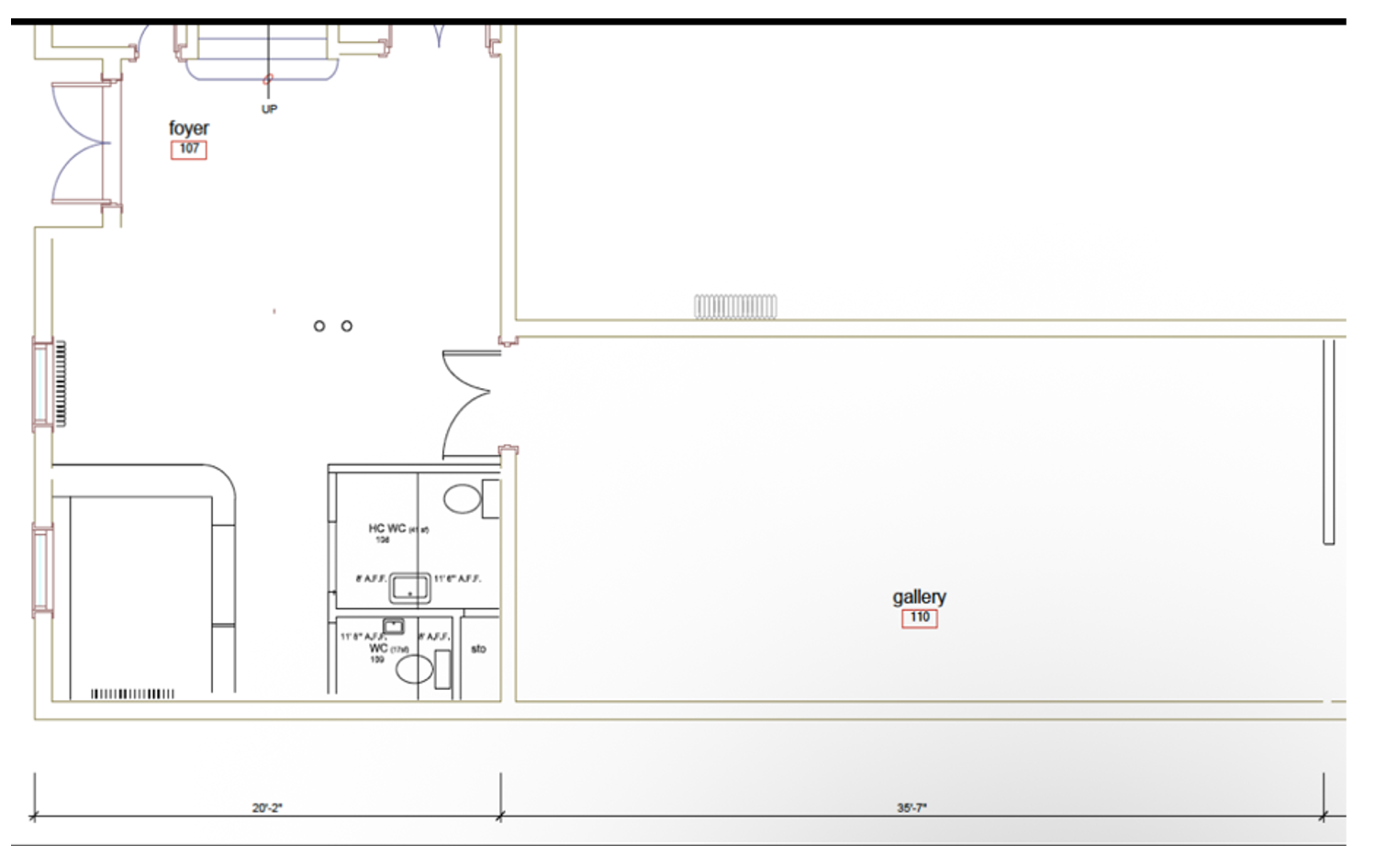
Curatorial Statement:
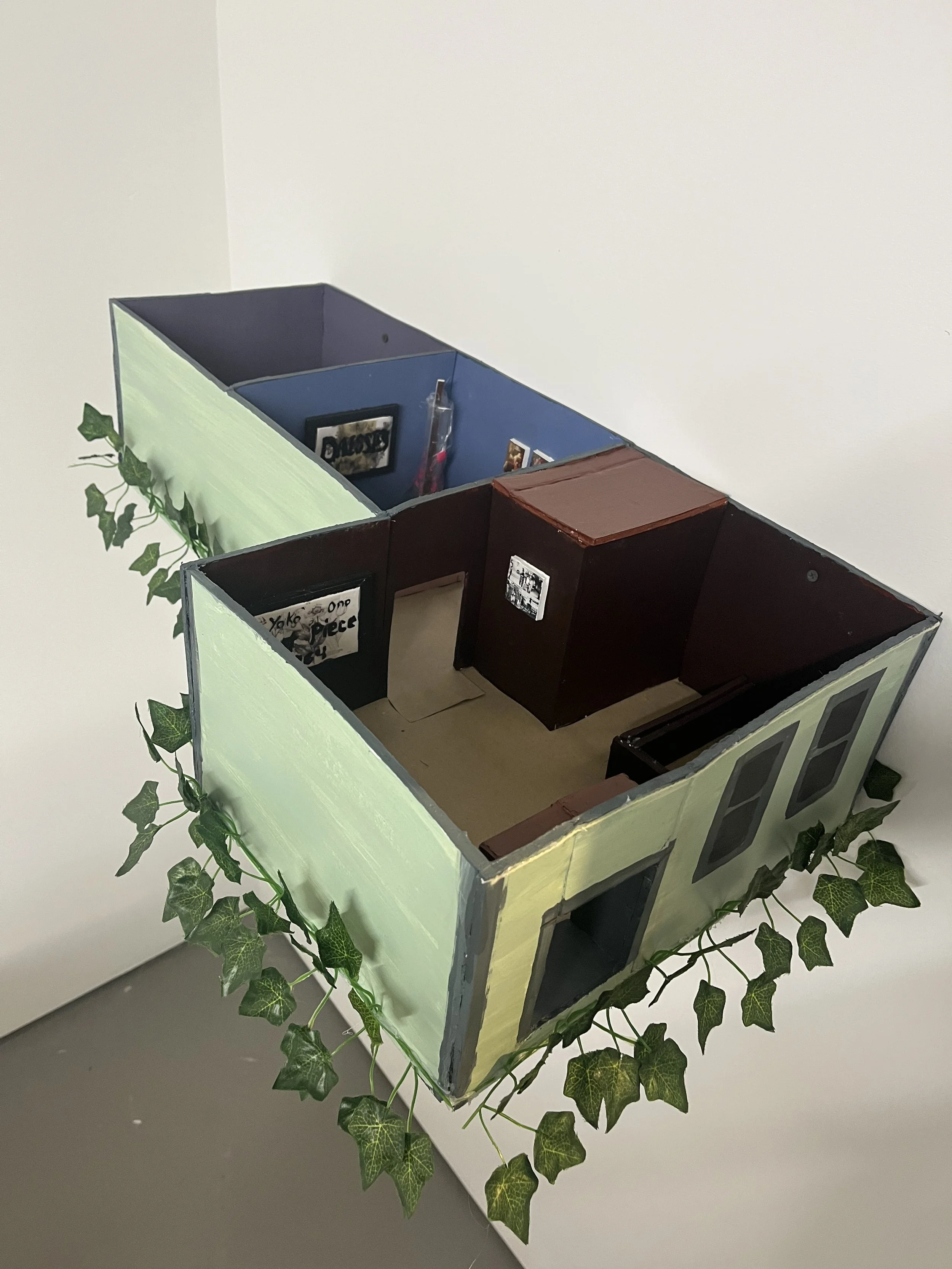
Bruised Red, Blue and Purple brings together an intergenerational selection of women artists whose practices expose, disrupt, and reimagines the cultural bruises placed upon the female body. Drawing from themes of public woman, hysteria, and inheritance, the exhibition traces the many ways women have been shaped, disciplined, desired, and mythologized — while also bringing attention to the healing process in reclaiming those histories referenced by the bruise. Through performance, film, sculpture, photography, and text, the exhibition forms a transhistorical dialogue about autonomy, vulnerability, and the ongoing negotiation between visibility and autonomy.
The Western Front — founded in 1973 by artists including performance and video pioneer Kate Craig, conceptualist Glenn Lewis, composer Martin Bartlett, and others—remains a vital site for experimental and politically charged art practices. Its history and audience make it an ideal context for reframing feminist legacies in the present day, particularly those that confront the feminist tensions in creative ways.
The exhibition opens with works that examine the figure of the public woman, a role historically marked by scrutiny and objectification. Yoko Ono’s Cut Piece (1964) positions the artist’s body as both vulnerable and confrontational, inviting viewers to cut away her clothing and forcing a confrontation with spectatorship, complicity, and autonomy. Kate Craig’s Delicate Issue (1979) continues this conversation through a media self-performance, using mirrors, gesture, and dialogue to question how women’s images are constructed and consumed. Ewa Partum’s Self-Identification (1980) also follows this lead and together echoes each other’s words from around the world originating from different times.
Moving into the section on hysteria, the exhibition displays cultural narratives surrounding unruliness, emotion, and excess. Věra Chytilová’s Daisies (1966) disrupts patriarchal expectations through anarchic, absurdist play, while Dilara Findikoglu’s Cage of Innocence (Look 24) translates societal expectations into garments that simultaneously reveal and restrain, and the act of wearing would be anarchic in everyday society. Paintings by Hannah Flowers explore the pressures embedded within domestic space—spaces that nurture and enclose. And in Dorothea Tanning’s Eine Kleine Nachtmusik (1943), the surreal threshold between girlhood and womanhood becomes a site of tension and awakening. Highlighting the age at which girls hit puberty, and their identity and autonomy are questioned and heavily criticized.
Finally, inheritance looks to the stories, rituals, and mythologies that shape generations. Jamaica Kincaid’s prose-poem Girl (1978) reveals the maternal transmission of social codes—both protective and oppressive. The ways mothers teach their daughters how to be, but not necessarily through their own voice, but one rippled from ear to mouth. Laetitia Ky’s Medusa’s Gaze (2022) reimagines a vilified mythic figure as a symbol of unapologetic power and stories that have critiqued and reimagined, along with the politicization of hair. and Christine Overvad Hansen’s Mother Loom (2024) transforms weaving into an embodied metaphor for intergenerational memory, ritual and expectations.
Artworks:
Yoko Ono
Cut Piece
1964
Performance (live); performed in Kyoto, Tokyo, London, and New York
Duration variable (performed until the artist stops)
Kate Craig
Delicate Issue
April 15, 1979
Performance for video; Camera: Hank Bull; Western Front Archive
12 min 41 sec
Ewa Partum
Self-Identification (Auto-Identification)
1980
Photomontage series (artist nude in public spaces)
Dimensions not specified
Věra Chytilová
Daisies (Sedmikrásky)
1966
35mm film (feature)
76 minutes
Dilara Fındıkoğlu
Cage of Innocence — Look 24, Spring/Summer 2026
2026
Garment — sheer/nude tulle base, silicone cherries, corsetry construction
Variable (wearable sculpture)
Hannah Flowers
The Cat Lady
2010s
Oil on panel
16 × 20 in
Hannah Flowers
The Three Graces
2010s
Oil on panel
20 × 16 in
Hannah Flowers
Table for Two
2010s
Oil on paper
9 × 12 in
Dorothea Tanning
Eine Kleine Nachtmusik
1943
Oil on canvas
16 × 24 in
Jamaica Kincaid
Girl
1978
Prose poem (wall text, audio, or print)
Not applicable
Laetitia Ky
Medusa’s Gaze
2022
C-print mounted on diasec-plexiglass satin
50 × 75 cm (19 7/10 × 29 1/2 in)
Christine Overvad Hansen
Mother Loom
2024
Ceramics, yarn, stainless steel; sound component
201 × 123 × 135 cm
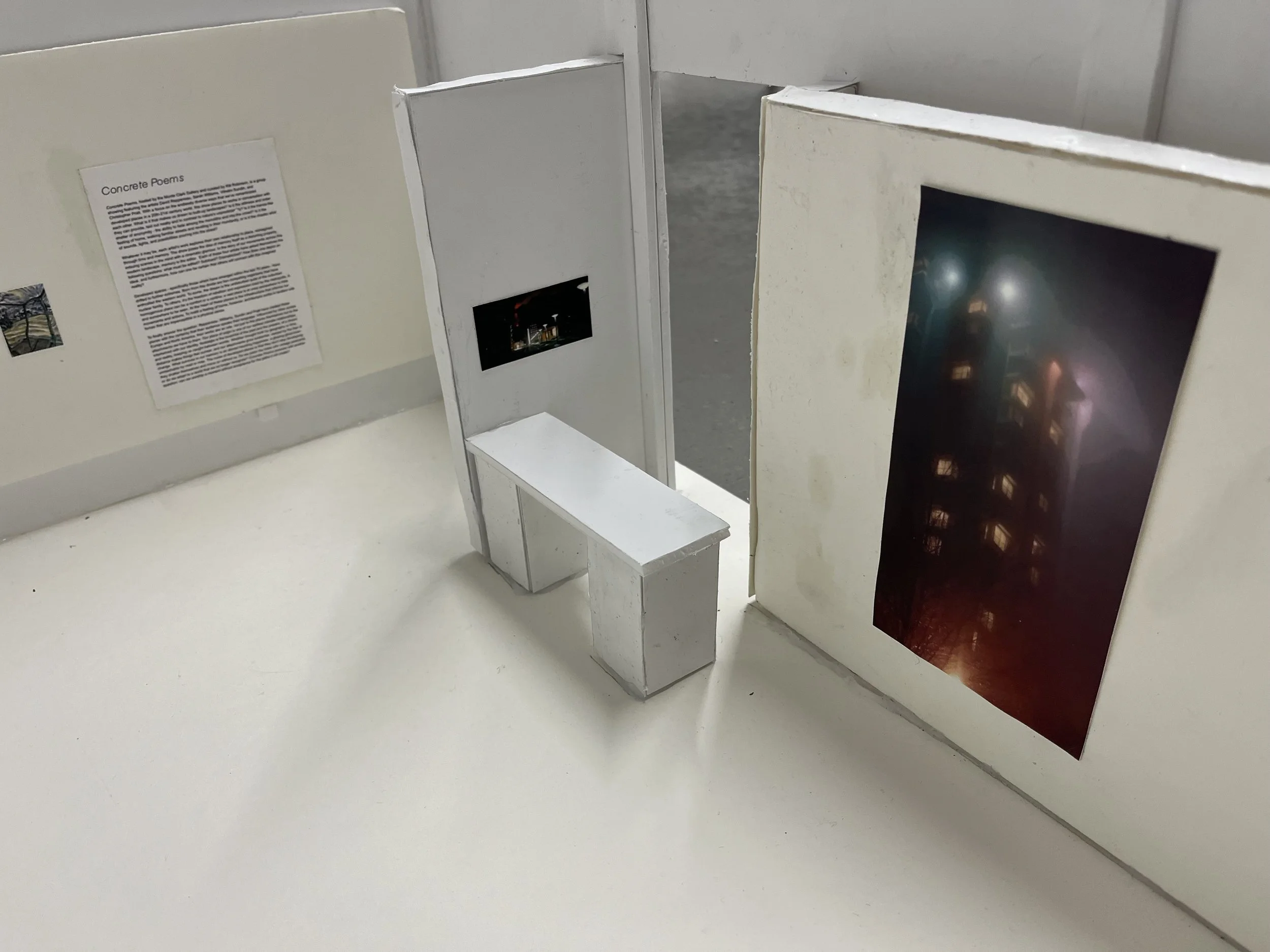
Exhibition statement:
Concrete Poems, hosted by the Monte Clark Gallery and curated by Kitt Robinson, is a group exhibition featuring the artists David Rappeneau, Sarah Williams, Vilhelm Sundin, and Christopher Pratt. With a focus on the endlessly diverse ways that 20th century developments have been romanticized, Concrete Poems places its works in conversation with each other. What is it that makes us drawn to built-up landscapes? Is it the stillness and order they can provide, laid out neatly and in contrast to nature’s unpredictability? Is it the trance-like shelter of anonymity - the ability to fade among the monoliths and into the crowd? Is it the feeling of home, walking familiar streets and revelling in their mundanity, or is it the chaotic whirl of sounds, lights, and possibilities pouring into the street?
Whatever it may be, each artist’s work explores their own relationship to place, reimagined through time and memory. The show poses the idea of memory itself as a distorting property, imbuing scenes in the mind with a cinematic glamour. In the story of our movements across this modern landscape, memory is the editor. Each of these four artists has asked themselves the following questions: what must be edited? Subdued? Dramaticized? How does one depict an ideal, and furthermore, how can one be certain that others will connect with this imagined reality?
Suburban developments — specifically those which have emerged within the last 70 years — have drifted to further extremes. Born from this divide are two competing organisms that have enthralled the Western world. To some, the dream is the undisturbed quiet of the suburban nuclear family. To others, it’s the freedom of rebellion and expression bred by the metropolis. A homogenous place can be a comfort or a confine; a vast place is at once somewhere to hide and somewhere to be seen. At the heart of these places is the infrastructure that informs our movements and actions. To instill a feeling of home, however, architecture works in tandem with forces that are imperceptible in a physical sense.
Responding to this concrete environment, Rappeneau, Williams, Sundin and Pratt have created poetic works with the certainty that their audience speaks their language. Influenced by cities across Europe and North America, their works are an ode, not just to the places themselves but to the attachments we have to them. Our place of origin is one of our earliest intimate relationships, intertwined with our identity. Nostalgia is the lovechild of the past and the present, of a dream and reality, keeping us caught between worlds. Whether brought forth by geography or time, distance makes things feel surreal, and our attachments grow existential, warped by the fear of change. What survives in our memory is an almost haunting happiness, a glowing ghost-town unreachable by road or map. The curse of developed places is that they don’t stop developing; they shatter themselves and move on without us. Do we patch the holes with vintage postcards, or do we adapt to a world that we no longer recognize? Concrete Poems answers with another question: can we worship a moment without accepting the paths it will create?
Artworks:
David Rappeneau
Untitled
2021
Acrylic, ballpoint pen, pencil, charcoal pencil, acrylic marker on paper
16” x 11¾”
(Girl in yellow shirt holding book & cigarette)
David Rappeneau
Untitled
2025
Mixed media on paper
~16” x 11¾”
(Angel holding lighter)
David Rappeneau
Untitled
2023
Mixed media on paper
~16” x 11¾”
(Yamaha jacket)
David Rappeneau
Untitled
2022
Mixed media on paper
~16” x 11¾”
(Volvo shirt)
David Rappeneau
Untitled
2022
Mixed media on paper
~16” x 11¾”
(Landscape with telephone wires)
David Rappeneau
Untitled
2021
Mixed media on paper
~16” x 11¾”
(Blue-haired person & black cat)
David Rappeneau
Untitled
2021
Mixed media on paper
~16” x 11¾” “
(Person with green lips & person with green hair)
David Rappeneau
Untitled
2025
Mixed media on paper
~16” x 11¾”
(Girls with rose tattoos)
David Rappeneau
Untitled
2022
Mixed media on paper
~16” x 11¾”
(Street with puddles)
David Rappeneau
Untitled
2025
Mixed media on paper
~16” x 11¾”
(Girls hanging out by pool)
Sarah Williams
Ark Lane
2025
Oil on board
16” x 16”
Sarah Williams
West Clayton Street
2025
Oil on board
16” x 16”
Sarah Williams
East Wood Street
2025
Oil on board
16” x 16”
Sarah Williams
Hoelscher Road
Oil on board
16” x 16”
2024
Sarah Williams
Little Wall Street
2022
Oil on board
24” x 24”
Sarah Williams
Keytesville Gas Station
2022
Oil on board
24” x 24”
Sarah Williams
Grover Road
2024
Oil on board
16” x 16”
Sarah Williams
Jay Avenue
2024
Oil on board
16” x 16”
Sarah Williams
Ira Drive
2024
Oil on board
16” x 16”
Sarah Williams
North Nile Street
2024
Oil on board
16” x 16”
Sarah Williams
2022
South Laclede Avenue
Oil on board
12” x 24”
Sarah Williams
Ann Street
2022
Oil on board
12” x 24”
Sarah Williams
Kauzlarich Street
2023
Oil on board
12” x 24”
Sarah Williams
East Helm Street
2023
Oil on board
12” x 24”
Vilhelm Sundin
Smokestack
2024
Archival pigment print mounted to dibond
30” x 15”
Vilhelm Sundin
Blackout
2017
Single-channel HD video installation
3m 5s
25.5 x 44.5 in
Vilhelm Sundin
Views from a Hotel Room
2019
Inkjet print
83.5” x 43”
Christopher Pratt
Winter Solstice Drive to St. Anthony, Full Moon Rising
2008
Oil on canvas
45.5” x 70”
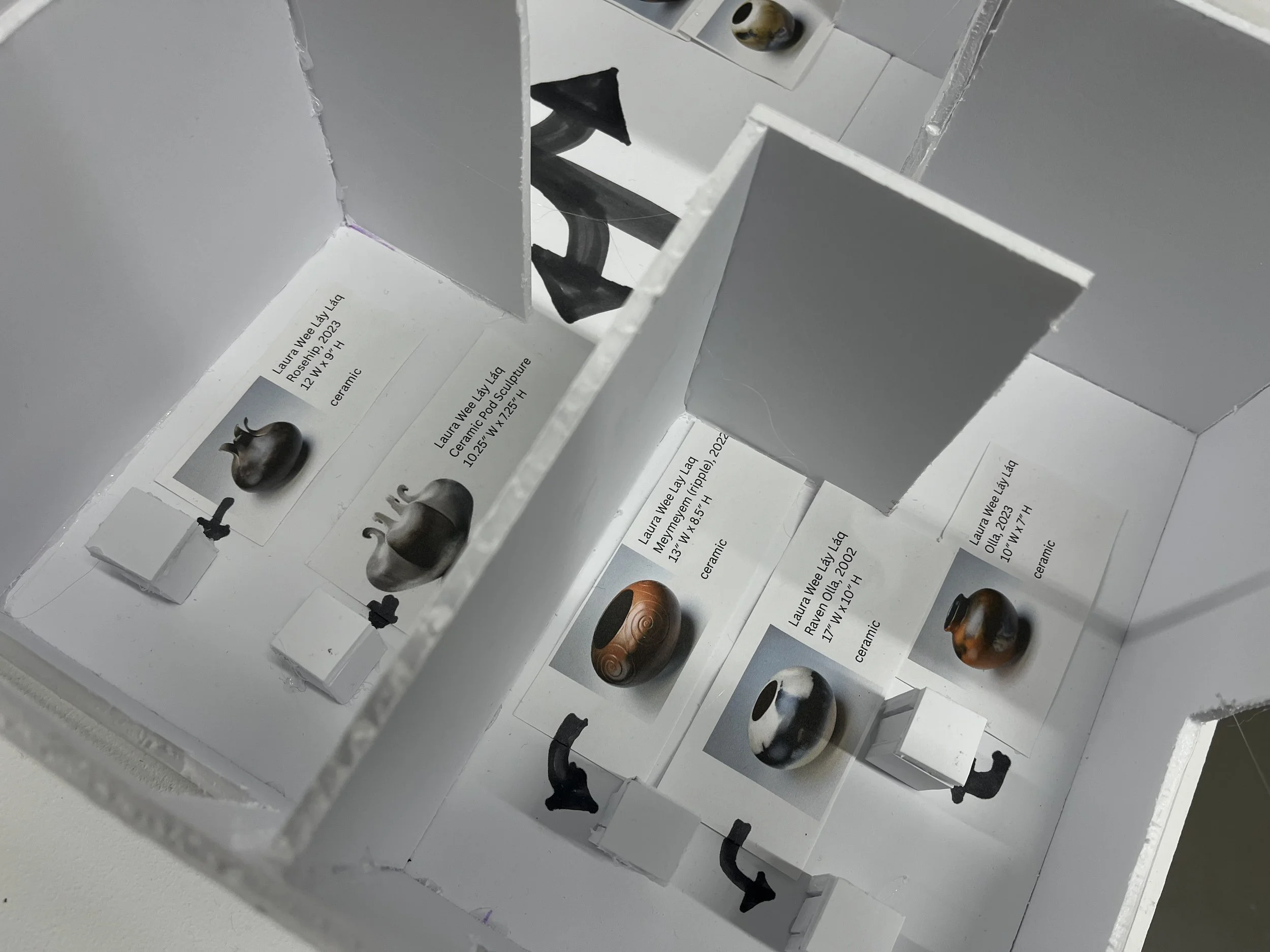
Curatorial Statement:
This exhibition presents the ceramic work of Stó:lō artist Laura Wee Láy Láq, whose practice foregrounds the relationship between land, material, and the human hand. Working in British Columbia, she understands clay not simply as a medium but as a living substance shaped by cultural memory and time. Her vessels raise questions about how matter can hold knowledge, how transformation becomes visible in surface and form, and how the processes of shaping and firing create their own vocabulary.
Wee Láy Láq’s work sits at a distinctive meeting point of several ceramic traditions. Her hand-built forms recall certain aspects of Japanese mingei and the studio pottery movement connected to Hamada Shoji and Bernard Leach, particularly their emphasis on natural surfaces and the value of process. At the same time, her practice is grounded in Stó:lō understandings of clay as a relational material connected to land and community. These influences overlap in ways that allow her vessels to shift between functional and sculptural roles, between everyday use and symbolic presence. The movement between these positions is deliberate, opening up questions about what a vessel does and what kinds of stories it can carry.
Each piece is shaped slowly through coiling, compressing, and burnishing. These slower methods let form emerge gradually rather than through rapid production. The firing process, which often involves primitive or sawdust techniques, introduces a degree of unpredictability. Smoke, ash, and flame leave traces that become part of the final work, revealing how heat participates in shaping the vessel. The resulting surfaces show subtle gradients and scorched marks that signal the material’s passage through risk and transformation.
Some works draw from natural shapes, such as seedpods or the rounded form of rosehips. These references point toward cycles of growth and regeneration, linking the vessels to broader ecological rhythms. Other pieces echo traditional container forms, connecting to the long history of clay objects made for holding, storing, and preserving. Across these different approaches, form and metaphor remain closely tied. The vessel becomes a point of contact between earth and body, holding memory in both volume and surface.
Visitors begin their experience at the entrance by touching a strip of raw clay. This tactile element introduces the material at its earliest stage and mirrors the hand-based knowledge present in Wee Láy Láq’s work. As they continue through the exhibition, viewers encounter vessels that bear the passage of time, shaped first by touch and then altered by fire. The combination of interactive material and finished works frames clay as something in motion rather than fixed or static.
Traces of Fire, Memories in Clay invites viewers to spend time with these forms and consider how clay participates in narrative, memory, and transformation. Through Wee Láy Láq’s work, the exhibition highlights the ongoing relationship between earth, human hands, and the stories that reside within material.
Laura Wee Láy Láq, Grey Vessel
5 1/4 × 8 × 8 in
ceramic
Laura Wee Láy Láq
Rosehip, 2023
W × 9 H in
ceramic
Laura Wee Láy Láq
Olla
2023
8 W × 6.5 H in
ceramic
Laura Wee Láy
Láq
192 inches high
ceramic
Laura Wee Láy Láq
Meymeyem (ripple), 2022
W × 8.5 H in
ceramic
Laura Wee Láy Láq
Olla, 2023
10 W × 7 H
in
ceramic
Laura Wee Láy Láq
Raven Olla
2002
17 W × 10 H in
ceramic
Laura Wee Láy
Ceramic Pod Sculpture
10.25 W × 7.25 H in
ceramic
Curatorial Statement:
As someone who has never been a dancer, I’ve long admired the capability, endurance, and dedication of dancers — especifically ballet artists. I was briefly in a ballet class when I was around seven or eight, and I felt cheated over the fact that we were all told to pretend to be butterflies instead of learning the steps necessary to perform a pirouette.
Physical performance, in general, has been so skewed and narrowed that it has become its own solidified body that denounces anyone or anything to differ. The audience has this expectation for the beauty and the norms of ballet and dance itself to the point where anything to differs becomes a joke, unnatural, and wrong. For a man or someone identifying as masculine is to be vulnerable and engage in performance and dance is seen as weak — dehumanizing and eliminating someone as a person — -something that drives one to avoid the opportunity of expression. Hail The New Puritan presents a mock documentary of Michael Clark’s work as a performer, filmed and archived to show the underground world of performance and dance as a whole. Charles Atlas is a filmographer who highlights a punk, queer and underground community in his many works. Michael Clark, an icon for punk, Scottish, UK pride, and a ballet messiah, creates a further dip into a less shallow pool of a male ballerine.
Hail The New Puritan, functions like a lamppost and invitation for elegant ballet dancing to all people, punks, of that time and opening the ends of expectations speaks to me. As a punk, you feel like you have to adhere to the expectations and gatekeeping of a traditionalist punk. Veering off is almost criminal for the gatekeepers. Ballet, being dubbed the “feminine only” form of dance is combated by the beauty of people like Michael Clark and in every scene shown in Hail The New Puritan.
The risk that comes with performance itself it's a sacrifice to the mind and the body--and it can break you for “never being enough.” Discouraging expression, banning vulnerability, and halting the art of performance itself. I don’t feel as if sacrifice is shown enough to the capacity of dance or performance--or in committing in general.
Tasking the body in order to deliver something for an audience to be in awe of, all whilst cringing at pushing your body to commit and appease.This is why Brendan Fernandes’ work stands out to me: the ability to be transparent about the dedication and the hardship to come from appeasing and making something viable to an audience. Both showing the struggles of attempting to stretch a limb in video mirrored by the exact tool which is instructed to use in order to become the proportionate puppet is incredible and empowering by showing what the task is to achieve that narrative of performance.
Archie Barry has this way of communicating messages and dreams we could never experience. Him using his body in works further in the aspect of being on the stage and being as a body. For me, that emulates showing. Along with every artist, that becomes your gaze, that is my stage, and my motions are your cabaret.
Sacrifice means more than anyone could know. Dance and art is only one of the few examples. Hopefully, we will come close soon where being vulnerable isn’t seen as weak.
Artworks:
Charles Atlas
Hail The New Puritan
1985-86
16mm film on video, 85 min.
Archie Barry
Dream For Reed
2025
Two-channel 4k video
26:09 min preformance
Archie Barry
Hypnic
2017
Approximately 4 min. video & performance
Archie Barry
Blue Dog
2021
4:04 min. video, 25 min performance
Brendan Fernandes
Standing Leg
2014
5:12 min. Video & Performance
Approximately 56’’ x 32” screen
Surrey Art Gallery
Brendan Fernandes
Mastered Form I
2015
Cast crystal ballet foot stretcher on plinth
Surrey Art Gallery
28 ½ ” x 3” x 3 ½ ” cast
3’8” x 10 ¼ ” x 2’ plinth
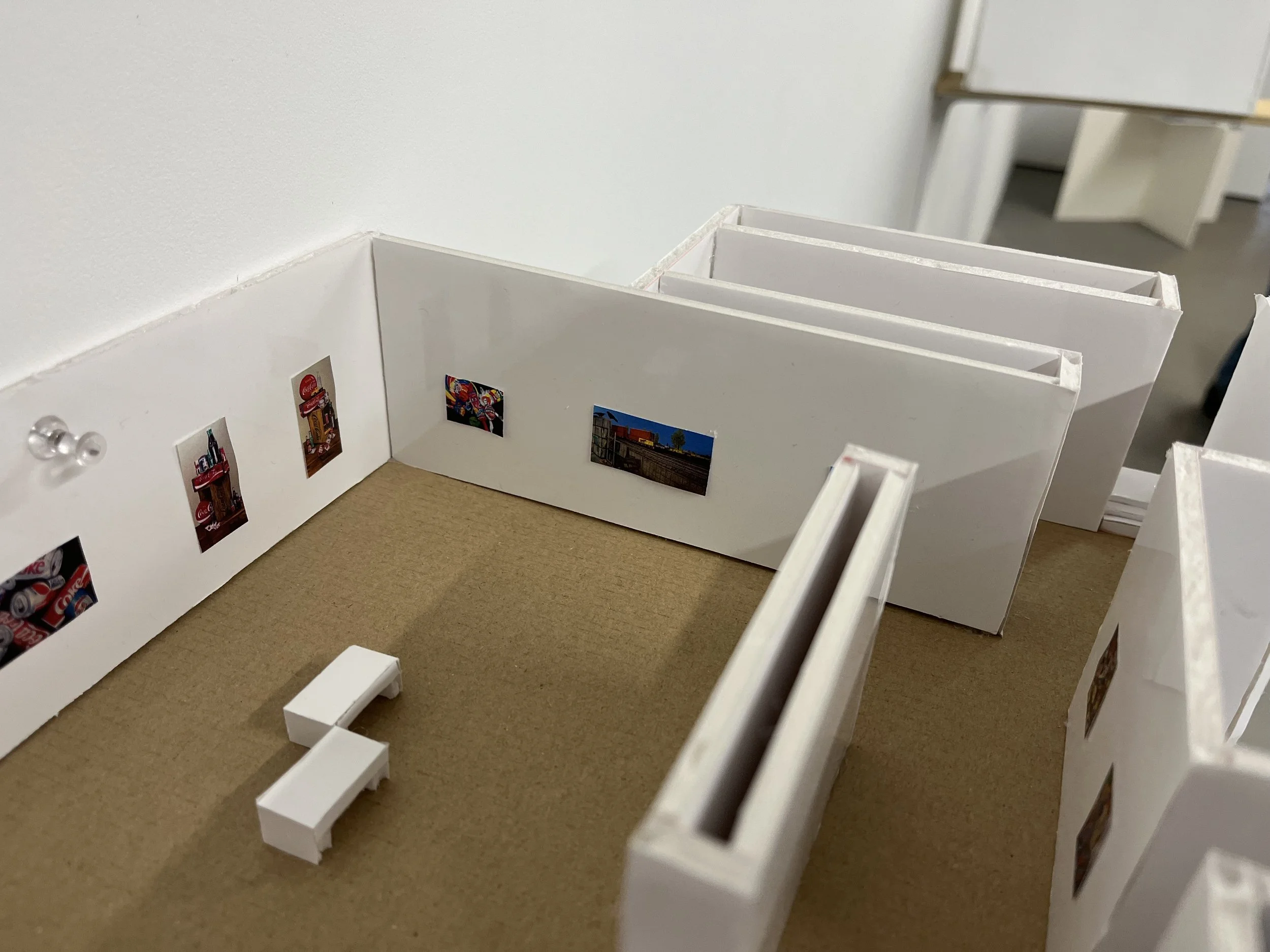
Curatorial Statement:
Nostalgia, or Something Like It brings together a selection of Kathy Traeger’s paintings that explore how American pop culture has shaped the emotional landscape far beyond its own borders. Although Traeger is a Canadian artist, her subjects: Coke bottles, diner signs, candy wrappers, toys, and mid-century advertising debris, which all come straight out of the American visual world that spread internationally after the Second World War. Her work looks warmly at these objects, but also questions how they became part of our shared memory in the first place.
A key thread in the exhibition is Traeger’s use of what can be called kitsch realism, a style often associated with Norman Rockwell. Rockwell’s world was charming and polished, almost too perfect, and it framed America as a place where everyday life was always wholesome. Traeger taps into that same sugary atmosphere, but the use of it could be seen as more critical. By leaning slightly too far into the sweetness, too much glow, too much innocence, she exposes the artificial nature of that nostalgia. The paintings acknowledge how comforting this softness can be, while also asking viewers to notice what this kind of imagery was originally designed to hide.
Alongside this, Traeger’s work also picks up the bright colours and throwaway objects associated with Pop Art: plastic toys, commercial logos, processed food, cheap packaging. These items were never meant to be sentimental, yet they’ve become markers of childhood and symbols of “simpler times.” The exhibition highlights how these attachments were shaped by American capitalism, which pushed such imagery into global culture until it started to feel personal.
This exhibition asks: What exactly are we nostalgic for? Which is a straightforward but complicated question. Are we longing for an era that truly felt better, or for a version of the past constructed through decades of advertising and branding? Traeger’s paintings sit right in the middle of this tension. They are affectionate but not naive, critical without being cynical. She paints these objects carefully, even lovingly, while allowing space for doubt to enter the frame. Is the artist herself being sentimental? Or ironic? The work doesn’t land firmly on one side. Instead, it opens a space to consider how nostalgia can be shaped by forces outside our personal experience. The warmth is real but the factors affecting it are still complicated.
Nostalgia or Something Like It invites the viewers to see and reconsider the essence behind these well known items from a different perspective. The exhibition questions the memories we cherish that may not be fully our own. In fact, the systems that initially created these images are closely linked to the nostalgia we experience. In Traeger's hands, these commonplace objects become a symbol of factors causing culture to spread, endures, and subtly influences the narratives we tell about the past.
Artworks:
Kathy Traeger
I Spy Something Read
2023
Acrylic on canvas
48 x 36 x 1.5 in
Kathy Traeger
Things Go Better With Coke
N/A
Acrylic on canvas
60 x 30 x 1.5 in
Kathy Traeger
Coke Addict
N/A
Acrylic on canvas
60 x 30 x 1.5 in
Kathy Traeger
The Bords and the B’s
2023
Acrylic on canvas
48 x 36 x 2 in
Kathy Traeger
Lace’em Up
2020
Acrylic on canvas
20 x 24 x 2 in
Kathy Traeger
Flying’s A Gas
2023
Acrylic on canvas
40 x 20 x 2 in
Kathy Traeger
Sweet Georgia Brown
2021
Acrylic on canvas
40x 20 x 2 in
Kathy Traeger
Suckers
2023
Acrylic on canvas
30 x 40 x 1.5 in
Kathy Traeger
Ghoul’s Gold By Kathy Traeger
N/A
Acrylic on canvas
40 x 30 x 2 in
Kathy Traeger
Battle of The Brands
N/A
Acrylic on canvas
24 x 36 x 1.5in
Kathy Traeger
It’s The Real Thing
N/A
Acrylic on canvas
40 x 30 x 1.5 in
Kathy Traeger
It All Started With A Mouse
N/A
Acrylic on canvas
40 x 30 x 1.5in
Kathy Traeger
I Don’t Want To Grow Up
N/A
Acrylic on canvas
40 x 30 x 1.5 in
Kathy Traeger
Conversation Piece
N/A
Acrylic on canvas
30 x 36 x 1.5 in
Kathy Traeger
Emoti-Cons
N/A
Acrylic on canvas
40 x 40 x 1.5 in
Kathy Traeger
Not The Box Seats He Was Hoping For
N/A
Acrylic on canvas
60 x 20 x 1.5 in
Kathy Traeger
Do You Think They’ll Notice
N/A
Acrylic on canvas
36 x 72 x 1.5 in
Kathy Traeger
Who Coloured the Crosswords!?
N/A
Acrylic on canvas
48 x 48 x 1.5 in
Kathy Traeger
Are We Playing Tag Or Skittles?
N/A
Acrylic on canvas
36 x 36 x 1.5 in
Kathy Traeger
Ready To Roll
N/A
Acrylic on canvas
36 x 60 x 1.5 in
Curatorial Statement:
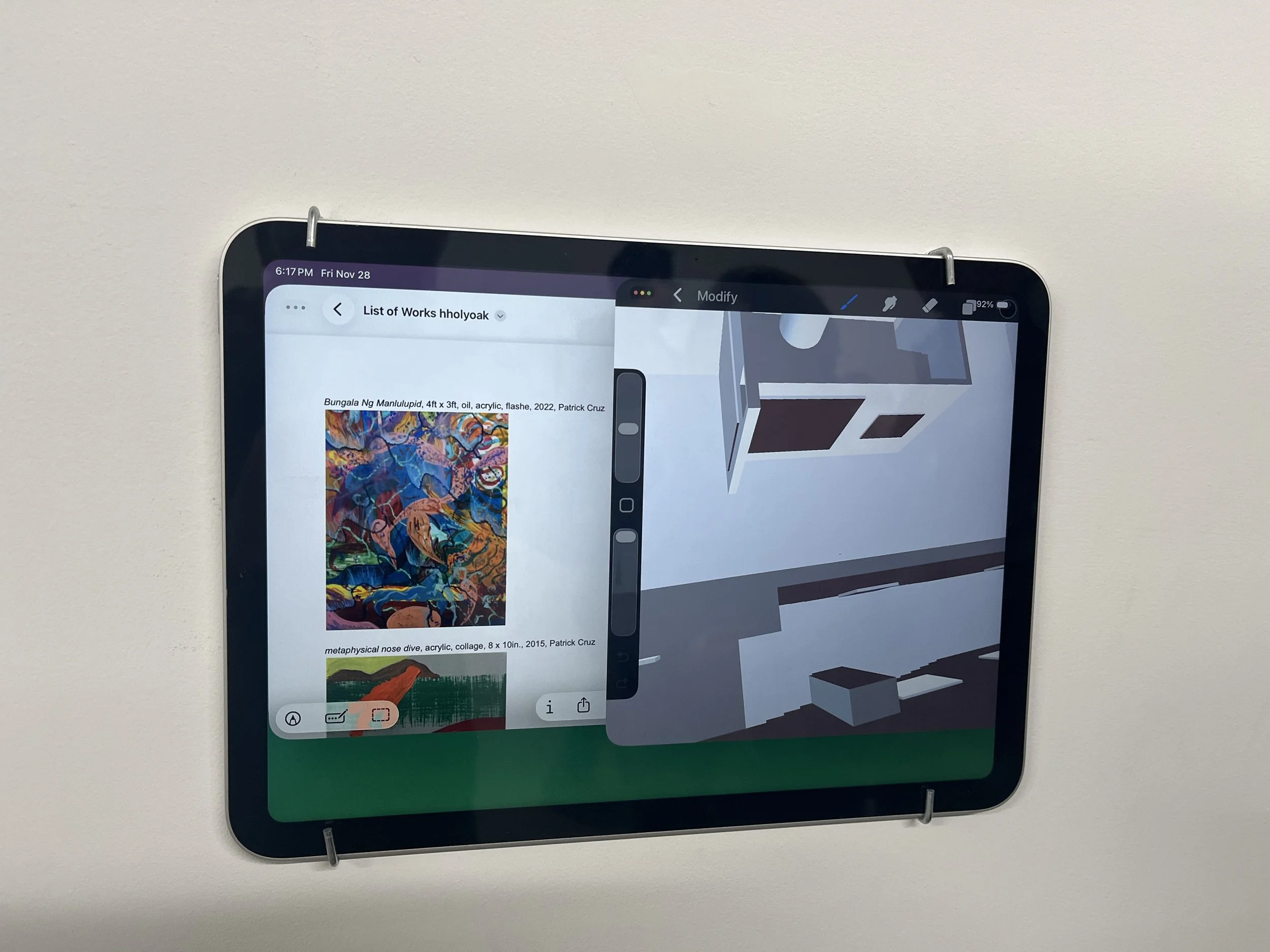
Patrick Cruz’s collection of works explores the concept of edge effects – that is, the meeting and intermixing of two distinct cultural communities – with a specific focus on Filipino cross-cultural interactions.
One of the most well-recognized and significant of these connections is that between the Indigenous peoples of the Philippines and the many peoples of China, including those hailing from the Canton region. Over the course of well over a thousand years, these peoples have been migrating to and from the two nations, transporting with them cultural practices in the form of food, beliefs, music, clothing, literature and, of course, art.
In fact, these seemingly separable elements of each culture are not so. In Cruz’s practice specifically, spiritual beliefs and works of art become blurred together, forming a unique result that showcases a combination of the naivete and instinctual inclination of human beings towards both spiritualism and self-expression through visual media.
Cruz creates works in a range of media, however this exhibit will focus on wall-mounted acrylic canvas paintings.
This exhibition, curated by Aksel Harper Holyoak, begins with a series of wall-mounted works showcasing Cruz’s more symbol- and pattern-focused pieces. Coming into the larger downstairs area, the show moves onto a focus on Cruz’s more figurative works, depicting both animal-like and anthropomorphic subjects, in wall-mounted form.
Moving on to the upstairs section of the Sardine, you can find Cruz’s mixed-media paintings, surrounding the audience on the walls to create an intimate feeling with the work, close enough to reach out and touch on all sides. It gradually opens up towards the following stairway that descends toward the entrance, creating a cyclical experience that can be navigated through multiple times and in either direction, symbolising the cycle of cross-cultural exchange between China, the Philippines, and Vancouver.
What the exhibition intends to encapsulate is the secondary encounter between Filipino and Cantonese culture in Vancouver. While the history of cross-cultural fertilisation directly between the Philippines and southern China is clear, within the context of the diasporas of the two cultures in North America, new ground for cultural exchange has emerged. The meeting of these two cultures within the milieu of Vancouver has influenced the artistic practice of Patrick Cruz. In turn, his work can be understood to embody the reunion and reinvigoration of two historically-linked cultures.
Nulla lectus ante, consequat et ex eget, feugiat tincidunt metus. Suspendisse nec congue purus. Sed a ligula quis sapien lacinia egestas. Quisque congue porttitor ullamcorper. Donec eu est non lacus lacinia semper.